Yellowstone for First-Time Visitors: A Smart Start Guide

This post may contain affiliate links. If you book or purchase through them, I may earn a small commission at no extra cost to you. I only recommend lodging, tours, gear, and travel resources that genuinely help make your Yellowstone trip easier to plan.
Table of Contents
Planning your first trip to Yellowstone National Park can feel surprisingly complicated.
Yellowstone is enormous, its major attractions are spread across different parts of the park, and driving between them often takes much longer than the mileage suggests. Add wildlife traffic jams, busy parking areas, changing weather, and seasonal road conditions, and it’s easy to build an itinerary that looks reasonable on paper but doesn’t work particularly well once you’re there.
The solution isn’t trying to plan every hour.
It’s understanding how Yellowstone is laid out, which experiences matter most to you, where you should stay, and how much you can realistically fit into each day.
For most first-time visitors, that means combining Yellowstone’s geothermal areas, Grand Canyon of the Yellowstone, wildlife viewing, and scenic driving while leaving enough flexibility for the unexpected delays that are simply part of visiting the park.
This guide walks you through those decisions in the order I’d make them so you can build a first Yellowstone trip that feels manageable instead of overwhelming.
Quick Answer
If this is your first trip to Yellowstone, focus on getting the big planning decisions right before worrying about individual stops.
For most first-time visitors:
Plan 3–5 days. Three days gives you a solid introduction, while four or five gives you more breathing room for wildlife, geothermal areas, scenic stops, and unexpected delays.
Choose lodging based on your itinerary. West Yellowstone is convenient for many trips, but it isn’t automatically the best base for everyone. Gardiner, Cooke City/Silver Gate, and lodging inside the park can make more sense depending on what you want to see.
Divide the park geographically. Don’t zigzag across Yellowstone chasing individual attractions. Group nearby sights into the same day to reduce unnecessary driving.
Prioritize Yellowstone’s signature experiences. For a first visit, that usually means Old Faithful and the geyser basins, Grand Prismatic Spring, Grand Canyon of the Yellowstone, and at least one dedicated wildlife-viewing period.
Expect delays. Bison in the road, crowded parking areas, construction, weather, and spontaneous scenic stops can all change your schedule.
The goal isn’t to see every corner of Yellowstone on your first trip. It’s to see the places that matter most without spending your entire vacation driving between them.
Yellowstone 2026 Planning Note
For 2026, you do not need a vehicle reservation to enter Yellowstone National Park. You do need a valid park entrance pass.
Roads, facilities, and services operate seasonally, and temporary closures can happen because of weather, construction, or other conditions. Before each day in the park, check the current Yellowstone road status rather than relying entirely on the route you planned before your trip.
Most Yellowstone lodging and campgrounds require reservations and can fill well in advance, particularly during the summer season.
For readers who want to check conditions, check the current Yellowstone road status.
Start Here: How to Plan Your First Yellowstone Trip
The easiest way to plan a first Yellowstone trip is to make the big decisions in the right order.
Choosing individual attractions before you understand the park’s layout often leads to unnecessary driving, awkward lodging choices, and an itinerary that has you crossing Yellowstone multiple times in the same day.
Step 1: Understand the Park Layout
Start with the Yellowstone Map Explained guide.
Learn where the major regions sit in relation to one another—Old Faithful, Canyon, Mammoth, Lamar Valley, Hayden Valley, Yellowstone Lake, and the park entrances.
You don’t need to memorize the map. You just need enough geographic context to understand why combining certain attractions makes sense and others doesn’t.
Step 2: Choose Your General Route
Next, use the Best Route Through Yellowstone guide to decide how you’ll move through the park.
Your best route depends on where you’re entering, where you’re staying, how many days you have, and which Yellowstone experiences are most important to you.
There’s no single route that’s best for every first-time visitor.
Step 3: Decide How Many Days You Have
Once you understand the geography, decide how much Yellowstone you can realistically cover.
For most first trips, 3–5 days is a useful range.
Three days requires more prioritizing. Four or five days gives you more flexibility for wildlife viewing, hiking, weather, and slower sightseeing.
The How Many Days in Yellowstone? guide can help you choose based on your travel style rather than simply adding more attractions to each day.
Step 4: Build Your Daily Itinerary
Only after those decisions should you start assigning attractions to individual days.
Use the Yellowstone Itinerary (3–5 Days) as your framework, then adjust it around your lodging, interests, hiking plans, and travel dates.
Planning in this order gives you a trip built around geography and realistic driving times, rather than a list of attractions connected by hours in the car.
What First-Time Visitors Get Wrong
Yellowstone’s biggest planning challenge isn’t deciding what to see.
It’s understanding how much time everything takes.
First-time visitors often look at the map, see that the major attractions are connected by the Grand Loop Road, and assume they can simply drive from one highlight to another.
In reality, Yellowstone days rarely run that smoothly.
A relatively short drive can become much longer because of a bison jam, road construction, crowded parking, or an unexpected wildlife sighting. Then there are all the places you’ll want to stop that weren’t part of the original plan.
Another common mistake is treating Yellowstone like one large sightseeing loop that should be completed in a day.
Instead, think of the park as several distinct regions. Spend part of a day exploring one geographic area before moving to the next rather than repeatedly crossing the park.
Your lodging matters for the same reason. Saving a little money on a hotel can backfire if its location adds hours of driving over the course of your trip.
The most successful first Yellowstone trips aren’t necessarily the ones with the longest attraction lists.
They’re the ones that account for distance, geography, lodging location, wildlife delays, and enough unscheduled time to enjoy the park when something unexpected happens.
How Yellowstone Is Structured — and Why It Matters
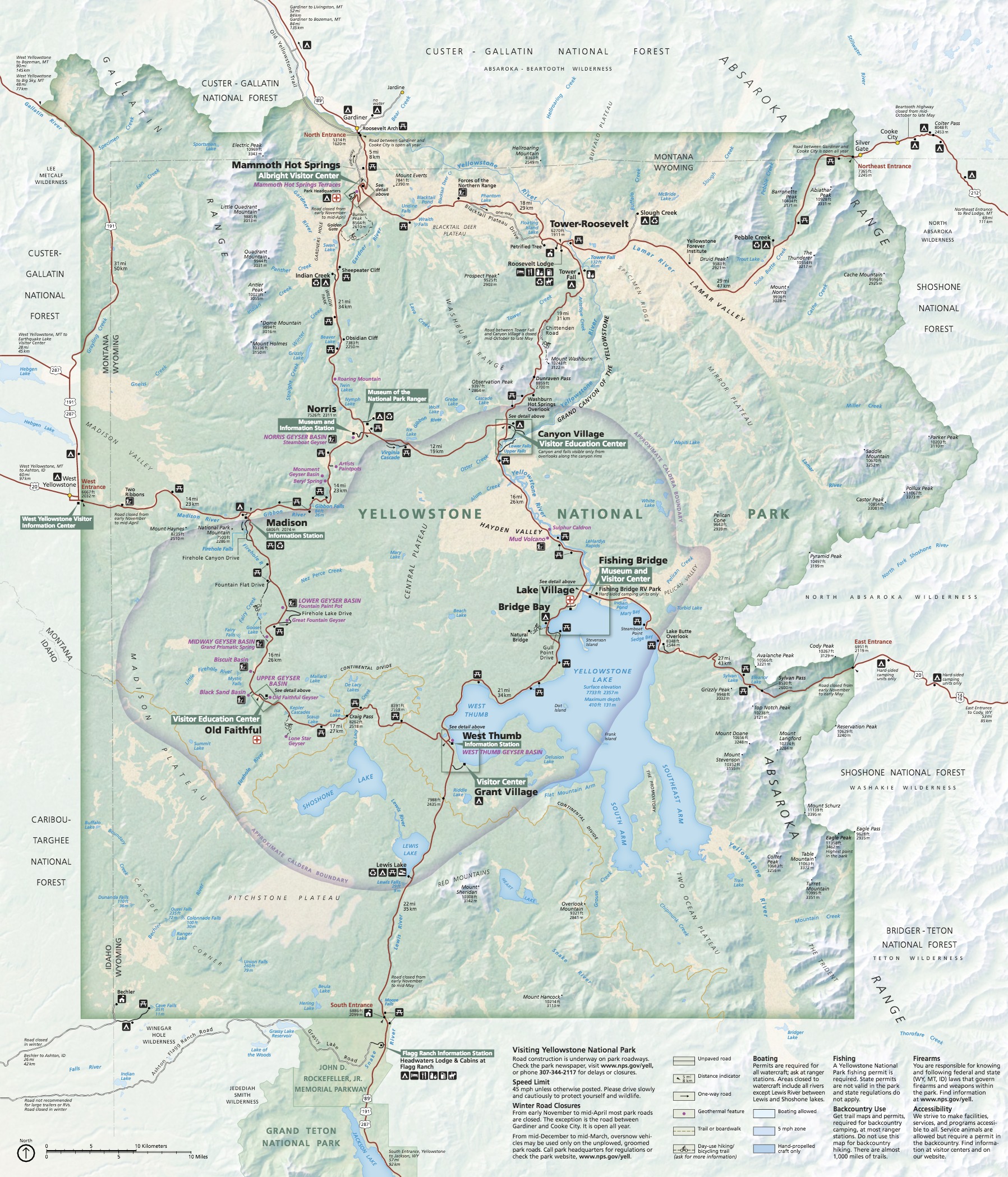
Yellowstone’s road system is built around the Grand Loop Road, a figure-eight-shaped route connecting many of the park’s major attractions. Understanding that basic layout makes planning much easier.
Instead of thinking about Yellowstone as one enormous loop, it helps to divide your sightseeing into geographic areas.
Lower Loop
The southern portion of the Grand Loop connects many of Yellowstone’s best-known geothermal and scenic areas, including:
- Old Faithful and the Upper Geyser Basin
- Grand Prismatic Spring and Midway Geyser Basin
- West Thumb Geyser Basin
- Yellowstone Lake
- Hayden Valley
- Grand Canyon of the Yellowstone
There’s far too much here to comfortably experience in a single rushed loop, especially if you want to walk the geyser basins or spend time watching wildlife.
Upper Loop
The northern portion connects areas such as:
- Mammoth Hot Springs
- Norris Geyser Basin
- Tower-Roosevelt
- Northern Range wildlife areas
Lamar Valley requires an important distinction: it’s not directly on the Grand Loop Road. You reach it by traveling east from the Tower-Roosevelt area toward the Northeast Entrance.
That’s worth understanding because a Lamar Valley wildlife morning isn’t simply another quick stop on an “Upper Loop day.”
Don’t Automatically Do the Lower Loop First
The original article recommends “Lower Loop first, Upper Loop second.” That’s too rigid.
Your first day should depend on where you’re staying, which entrance you’re using, weather, wildlife priorities, and how many days you have.
A traveler staying in Gardiner may logically begin around Mammoth or the Northern Range. Someone staying in West Yellowstone may find the geyser basins more convenient. A visitor staying near Cooke City may want Lamar Valley first.
The important planning rule isn’t which loop comes first.
It’s grouping nearby areas together so you aren’t repeatedly driving across Yellowstone.
Is Yellowstone a Good First National Park?
Yes. Yellowstone can be an excellent first national park, especially if you want a trip that combines wildlife, geothermal features, scenic drives, waterfalls, lakes, and short walks without requiring difficult hiking every day.
One of Yellowstone’s advantages for first-time national park visitors is that many of its signature experiences are relatively accessible. You don’t have to complete a strenuous hike to see Old Faithful, Grand Prismatic Spring, Grand Canyon of the Yellowstone, or large concentrations of wildlife.
But Yellowstone does require more planning than its famous attractions might suggest.
The park is a particularly good fit if you enjoy wildlife, unusual landscapes, scenic driving, photography, and exploring several different environments in one trip.
It may be less appealing if you want a highly walkable vacation, dislike driving, or prefer to arrive without much advance planning.
Crowds can also be significant during peak periods, although starting strategically, choosing lodging carefully, and spending more time away from the busiest midday attractions can make a noticeable difference.
If you’re still deciding whether the driving, crowds, and planning are worth it for your travel style, the Is Yellowstone Worth It? guide goes deeper into those tradeoffs.
What First-Time Visitors Should Prioritize
Yellowstone has more worthwhile stops than you can reasonably fit into one first trip. Instead of trying to see everything, build your itinerary around a few signature Yellowstone experiences, then add smaller stops when time allows.
Old Faithful + the Geyser Basins
Old Faithful is worth seeing, but don’t make the mistake of treating it as a quick photo stop.
The surrounding Upper Geyser Basin contains one of the greatest concentrations of geysers and hot springs in the park. Give yourself time to walk at least part of the boardwalk system rather than arriving for an eruption and immediately leaving.
If geothermal features are one of the main reasons you’re visiting Yellowstone, this area deserves a significant portion of your day.
Grand Prismatic Spring
Grand Prismatic Spring is another first-trip priority, but there are two different ways to experience it.
The Midway Geyser Basin boardwalk brings you close to the spring, while the Grand Prismatic Overlook provides the elevated view many visitors recognize from photographs.
If time and conditions allow, the two experiences complement each other rather than replace one another.
Grand Canyon of the Yellowstone
Don’t skip the canyon because you’ve already seen Yellowstone’s geothermal areas.
The Grand Canyon of the Yellowstone feels completely different from the geyser basins and is one of the park’s essential scenic areas.
Plan enough time to explore viewpoints around the canyon rather than trying to squeeze one overlook between distant attractions.
Wildlife Viewing
Wildlife is one of the biggest reasons to visit Yellowstone, but it shouldn’t be treated like a scheduled attraction.
Lamar Valley and Hayden Valley are two of the park’s best-known wildlife-viewing areas, particularly around dawn and dusk. What you’ll actually see varies by season, weather, location, and luck.
Bison are commonly encountered throughout the park, while sightings of animals such as wolves and bears are much less predictable.
Build wildlife time into your itinerary, bring binoculars, and watch from a safe distance. Yellowstone requires visitors to stay at least 100 yards from bears, wolves, and cougars and 25 yards from all other wildlife, including bison and elk. Never approach an animal for a better photo.
For a deeper look at where, when, and how to watch responsibly, use the Yellowstone Wildlife Guide when planning your trip.
Don’t forget the practical side of your trip. Yellowstone weather can change quickly, and long sightseeing days are much easier when you have the right layers, day-use gear, and wildlife-viewing essentials. Use my Yellowstone Packing List to make sure you have what you need before you leave.
How Many Days Do You Need in Yellowstone?
For most first-time visitors, 3–5 days is the sweet spot.
You can visit Yellowstone in less time, but the shorter the trip, the more selective you’ll need to be. The park rewards travelers who leave room for wildlife stops, boardwalk walks, scenic overlooks, and the inevitable delays that don’t appear on an itinerary.
2 Days in Yellowstone
Two days can work if Yellowstone is part of a larger road trip, but you’ll need to focus on the highlights.
Prioritize a few major areas rather than attempting to drive every section of the park. A short visit might combine the Old Faithful and Grand Prismatic area with Grand Canyon of the Yellowstone and one dedicated wildlife-viewing period.
You’ll see some of Yellowstone’s signature sights, but expect to leave plenty for another trip.
3 Days in Yellowstone
Three days is a solid first visit and gives you enough time to experience the park’s major landscapes without turning every day into a marathon.
You can generally devote separate portions of the trip to the geyser basins, canyon and lake areas, and northern Yellowstone or wildlife viewing.
You’ll still need to prioritize, but three days gives you much more flexibility when traffic, parking, weather, or wildlife slows things down.
4–5 Days in Yellowstone
If your schedule allows it, four or five days is my preferred range for a first Yellowstone trip.
The extra time doesn’t mean adding dozens of attractions. It means slowing down.
You can spend more time walking the geyser basins, return to a wildlife area at a better time of day, add a hike, explore Mammoth or Yellowstone Lake more thoroughly, and recover when a day’s plans don’t go exactly as expected.
That’s often the difference between simply checking Yellowstone’s famous sights off a list and actually enjoying the park.
If you’re deciding how much time to give Yellowstone, use the How Many Days in Yellowstone? guide for a more detailed comparison of different trip lengths.
Where to Stay for Your First Yellowstone Trip
Where you stay can have a bigger impact on your Yellowstone trip than almost any other planning decision.
There isn’t one universally “best” place for first-time visitors. The right base depends on which entrance you’re using, what you want to prioritize, and whether you’re willing to change lodging during your trip.
West Yellowstone
West Yellowstone is one of the most convenient bases for many first-time trips because it’s close to the West Entrance and provides easy access toward Madison Junction, the geyser basins, and the western side of the park.
It also has a large selection of hotels, restaurants, shops, and other traveler services.
It’s especially practical if your itinerary emphasizes Old Faithful, Grand Prismatic Spring, and the geyser basins.
But it isn’t automatically the best choice for every Yellowstone itinerary. Repeated trips from West Yellowstone to Lamar Valley or the far northern side of the park can create long driving days.
Gardiner
Gardiner sits just outside Yellowstone’s North Entrance and works particularly well if Mammoth Hot Springs and the Northern Range are priorities.
It can also be a useful base for travelers planning early wildlife-viewing trips toward Lamar Valley.
The tradeoff is distance from Old Faithful and the park’s southwestern geothermal areas, so staying here for an entire trip may not make sense if most of your itinerary is concentrated farther south.
Staying Inside Yellowstone
Staying inside the park can reduce some of the daily driving associated with entering and leaving Yellowstone.
The biggest advantage isn’t necessarily luxury or price—it’s location.
Depending on where you stay, you may be positioned much closer to the area you’re exploring the following morning. That can be particularly valuable for early starts.
Availability is limited, however, and park lodging often books well ahead of popular travel dates.
Should You Split Your Stay?
For a longer first trip, splitting your lodging between two areas can be worth considering.
For example, spending part of your trip near the western or southern attractions and another portion closer to northern Yellowstone can reduce backtracking.
You don’t need to move hotels every night. In fact, that usually creates more hassle than it saves. But one strategic lodging change during a four- or five-day visit can sometimes make the overall itinerary much more efficient.
Before booking, compare the location of your lodging against your actual daily route—not just the nightly price. A cheaper room isn’t necessarily a better value if it adds several hours of driving to your trip.
Once you’ve decided which part of Yellowstone makes the most sense for your itinerary, compare lodging before you lock in your daily route. Check current hotel options on Booking.com or Expedia, and pay close attention to location—not just nightly price. Staying closer to the part of the park you’ll explore can save a surprising amount of driving.
Should You Book a Yellowstone Tour?
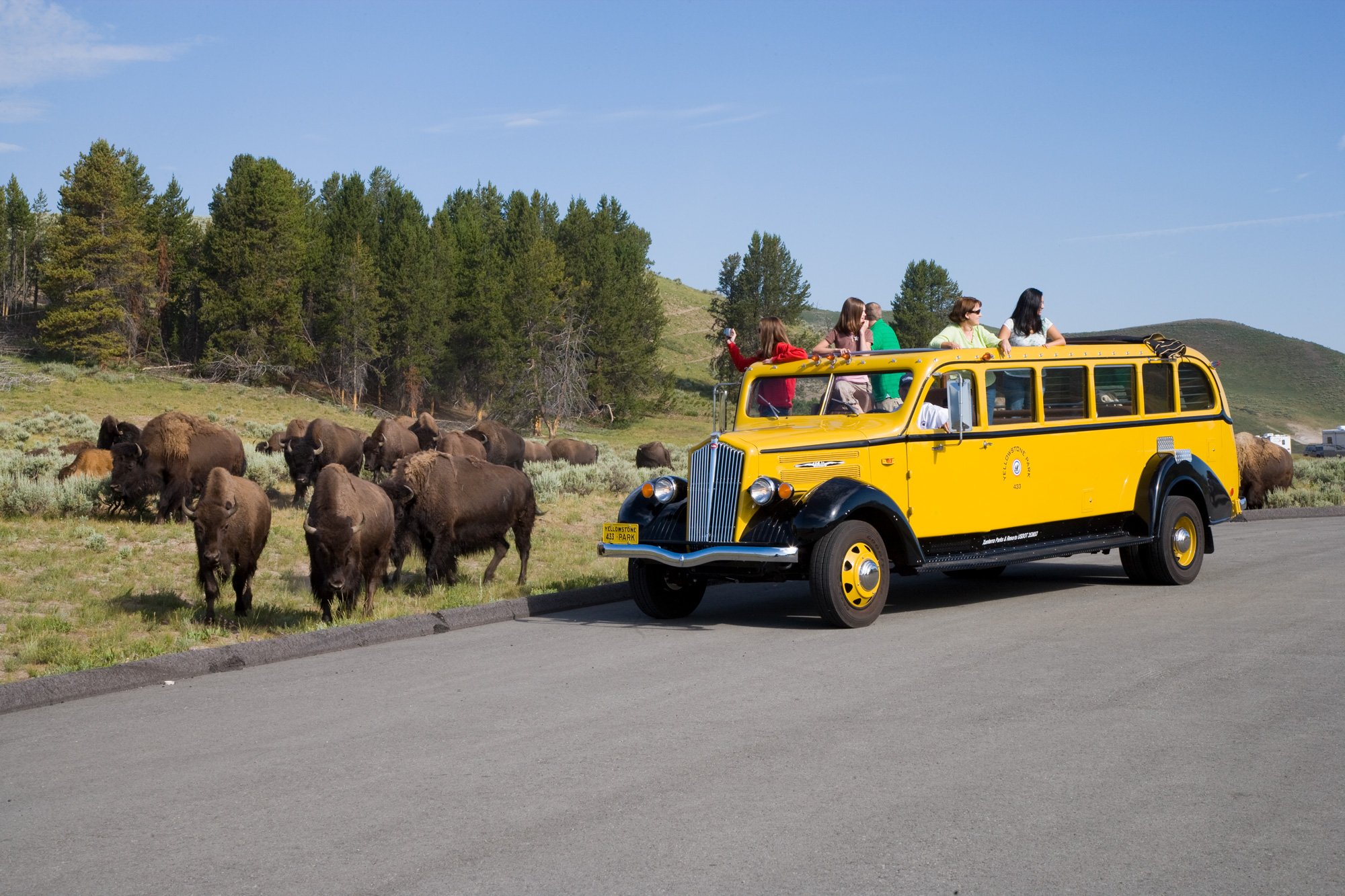
You don’t need a tour to visit Yellowstone successfully. Most first-time visitors can explore the park independently with a rental car or their own vehicle.
But there are a few situations where a guided tour can genuinely improve the trip.
Wildlife Tours
This is where I think a guide can provide the most value.
Yellowstone wildlife guides know where animals have been active recently, understand seasonal behavior, and often provide high-powered spotting scopes that make distant viewing much better.
A wildlife tour can be especially worthwhile if seeing wolves is one of your top priorities. Wolves are often far from the road and can be extremely difficult for first-time visitors to locate on their own.
A tour still can’t guarantee a particular animal sighting, but an experienced guide can substantially improve the quality of the wildlife-viewing experience.
Sightseeing Tours
A general Yellowstone sightseeing tour can make sense if you:
- Don’t want to drive the park yourself
- Have only one or two days
- Prefer having someone else handle the route and timing
- Want interpretation and park history while you travel
If you’re comfortable driving and have three or more days, you probably don’t need a general sightseeing tour simply to reach Yellowstone’s major attractions.
When I Would Spend the Money
For most independent travelers, I’d put the tour budget toward one specialized experience rather than several general tours.
A guided wildlife morning in the Northern Range is the strongest candidate, particularly if wildlife is one of the main reasons you’re coming to Yellowstone.
That gives you the benefits of local expertise without giving up the flexibility to explore the rest of the park at your own pace.
If a guided experience makes sense for your trip, compare Yellowstone tours on Viator before booking. Look closely at the departure location, tour length, group size, and whether the itinerary focuses on wildlife or general sightseeing.
Driving in Yellowstone: What First-Time Visitors Should Expect

Driving is one of the biggest parts of a Yellowstone trip—and one of the easiest things to underestimate.
Distances that look short on a map can take much longer than expected once you account for slower traffic, construction, crowded parking areas, scenic stops, and wildlife in or near the road.
Don’t Build Your Day Around Google Maps Times
Navigation apps are useful for orientation, but don’t treat the estimated drive time as a reliable Yellowstone schedule.
A route that should take an hour can take considerably longer if you encounter a bison jam or have trouble finding parking at a popular attraction.
Build extra time between major stops instead of planning your day down to the minute.
Start Early When You Can
Early mornings are especially valuable in Yellowstone.
You’ll often encounter lighter traffic and less competition for parking, and morning is also an excellent time to dedicate to wildlife viewing.
That doesn’t mean every day needs to begin before sunrise. Use your earliest starts strategically for the places where timing matters most.
Fuel Before You Need It
Gas is available at several locations in and around Yellowstone, but don’t wait until you’re nearly empty to start looking for it.
Long distances, unexpected detours, and traffic delays make Yellowstone a poor place to test how far you can stretch a tank of gas.
Wildlife Has the Right of Way
Wildlife frequently crosses—and sometimes simply stands in—the road.
Never attempt to push through a herd, drive onto the shoulder to get around animals, or stop your vehicle in a way that blocks traffic simply to take a photograph.
If you encounter a wildlife jam, assume it may affect the rest of your schedule and adjust accordingly.
That’s part of Yellowstone travel, not a planning failure.
The best Yellowstone itineraries have enough flexibility that one herd of bison doesn’t ruin the entire day.
RV vs. Hotel: Which Is Better for a First Yellowstone Trip?

Both can work well in Yellowstone, but they create very different trips. The better choice depends less on Yellowstone itself and more on how you prefer to travel.
Choose an RV If You Want:
An RV can be a great fit if camping is part of the experience you want—not simply a way to save money.
It gives you your own kitchen, familiar gear, and the ability to stay at campgrounds in or near the park. It’s also useful if Yellowstone is one stop on a longer Western road trip.
The tradeoff is that Yellowstone requires more planning with a larger vehicle. Campground availability, site length, hookups, road restrictions, parking, and maneuverability all matter.
If you’re renting, compare the total cost of the RV trip—rental, campground fees, fuel, mileage charges, insurance, and supplies—rather than comparing the nightly RV rate with a hotel room.
If you’re considering the RV option but don’t own one, you can compare RV rentals on Outdoorsy before deciding whether the total cost and setup make sense for your Yellowstone trip.
Choose a Hotel If You Want:
A hotel is usually simpler if you want to spend your days sightseeing and don’t want campground setup, RV systems, or campsite reservations added to the trip.
Hotels also make it easier to use a smaller vehicle for exploring Yellowstone, which can be helpful at busy parking areas and scenic stops.
The downside is that lodging near Yellowstone can be expensive, particularly during peak season.
What I Recommend for First-Time Visitors
Don’t choose an RV because you’ve heard Yellowstone is an “RV park” or because you assume it will automatically be cheaper.
Choose an RV if RV travel is part of the vacation you want.
If your primary goal is simply to explore Yellowstone as easily as possible, a hotel plus a regular vehicle is often the more straightforward first-trip setup.
If you’re still deciding, compare both options in the RV vs. Hotel in Yellowstone guide before you book.
Biggest Mistakes First-Time Yellowstone Visitors Make
Most Yellowstone planning mistakes come from trying to fit too much into too little time. A realistic itinerary gives you a much better experience than a long checklist of attractions.
Trying to See the Entire Park in One Day
Yellowstone is simply too large for a meaningful one-day loop of everything.
You can absolutely enjoy Yellowstone with one day, but you’ll need to choose a region or a small group of priorities rather than attempting Old Faithful, Grand Prismatic, the canyon, Mammoth, Lamar Valley, and Yellowstone Lake all in the same day.
Underestimating Driving Time
Mileage doesn’t tell the whole story here.
Wildlife jams, construction, slower traffic, parking, and spontaneous stops can turn a carefully timed itinerary upside down. Leave room between major attractions instead of scheduling stops back-to-back.
Choosing Lodging Based Only on Price
A less expensive hotel isn’t always a bargain if its location adds hours of driving.
Before booking, look at where you’ll be spending each day and consider the total drive time across your entire stay.
Treating Wildlife Like an Attraction You Can Schedule
You can improve your chances by visiting good wildlife areas at productive times of day, but Yellowstone’s animals don’t follow your itinerary.
Allow time to watch when you find wildlife rather than racing away because the next scheduled stop is waiting.
Ignoring Yellowstone’s Safety Rules
Yellowstone isn’t a theme park.
Stay on designated boardwalks and trails in thermal areas, maintain the required distance from wildlife, and never approach an animal for a photograph.
Conditions around geothermal features and wildlife can become dangerous very quickly when visitors ignore park rules.
Planning Every Minute
Some of your best Yellowstone moments may be things you never planned—a bear visible from a safe distance, a herd of bison crossing the road, an unexpected eruption, or a viewpoint you decide to explore.
Build the important pieces of your trip first, but leave enough flexibility to enjoy Yellowstone when it refuses to follow your schedule.
For a deeper breakdown of what to avoid, read Yellowstone Mistakes First-Time Visitors Make before finalizing your itinerary.
When This Guide Works Best
his guide is designed for first-time Yellowstone visitors who want to see the park’s major highlights without turning the trip into a race.
It works especially well if you’re:
- Visiting Yellowstone for the first time
- Planning roughly 3–5 days in the park
- Traveling by car or RV
- Interested in a mix of geothermal features, wildlife, scenery, and short walks
- Trying to decide where to stay and how to organize your days
You don’t need to follow one exact itinerary for this approach to work.
A family traveling with young children may spend more time at easy-access viewpoints and boardwalks. A wildlife-focused traveler may devote multiple mornings to Lamar or Hayden Valley. Hikers may intentionally see fewer major attractions so they can spend more time on the trail.
The important part is the planning framework:
Understand the park → choose your priorities → choose your lodging → group sights geographically → build realistic days.
Once those pieces are in place, the rest of your Yellowstone trip becomes much easier to organize.
Frequently Asked Questions
How many days should a first-time visitor spend in Yellowstone?
For most first-time visitors, 3–5 days is a good range. Three days gives you enough time to see many of Yellowstone’s major highlights, while four or five days allows for a slower pace, more wildlife viewing, hiking, and flexibility when traffic or weather changes your plans.
What should I see first in Yellowstone?
There isn’t one attraction everyone should visit first. Start with the area that makes the most sense based on where you’re staying and your route for that day. Old Faithful and the geyser basins, Grand Prismatic Spring, Grand Canyon of the Yellowstone, and a wildlife-viewing area such as Lamar or Hayden Valley are excellent priorities for a first trip.
Where is the best place to stay for a first Yellowstone trip?
It depends on your itinerary. West Yellowstone is convenient for the geyser basins and many central attractions, while Gardiner works well for Mammoth and northern Yellowstone. Staying inside the park can reduce some driving, and travelers with four or five days may benefit from splitting their stay between two strategically located bases.
Do I need a tour for my first Yellowstone visit?
No. Yellowstone is very manageable as a self-guided trip if you’re comfortable driving and planning your route. A guided wildlife tour can be worth the additional cost if wildlife—particularly wolves—is a major priority, because experienced guides know where to look and typically provide spotting equipment.
Is Yellowstone difficult to drive?
The roads themselves aren’t usually the hardest part. The challenge is the combination of long distances, traffic, wildlife jams, construction, parking congestion, and changing weather. Give yourself more time than a navigation app suggests and avoid planning your days down to the minute.
Can I visit Yellowstone without hiking?
Absolutely. Many of Yellowstone’s signature experiences can be reached from roads, boardwalks, and relatively short walks. You can see Old Faithful, geothermal basins, major canyon viewpoints, Yellowstone Lake, Mammoth Hot Springs, and wildlife without doing a long hike. Hiking can add another dimension to the trip, but it isn’t required for a rewarding first visit.
Do I need to book Yellowstone far in advance?
For popular travel periods, it’s smart to reserve lodging and campgrounds as early as you reasonably can, especially if you want to stay inside the park or have limited flexibility with your dates. Tours and other activities can be added after the basic trip structure is in place. We’ll verify the current 2026 reservation and access details during the factual-check pass.
Bottom Line
Your first Yellowstone trip doesn’t need to include every geyser, overlook, wildlife valley, and scenic road in the park.
A better first visit comes from making a few important decisions well: give yourself enough days, choose lodging that works with your route, group nearby attractions together, and leave room for Yellowstone to slow you down.
For most travelers, 3–5 days provides enough time to experience Yellowstone’s major landscapes without making every day feel rushed.
Prioritize the experiences that make Yellowstone unique—geothermal areas, Grand Canyon of the Yellowstone, wildlife, and the park’s enormous landscapes—then let the smaller stops fill in naturally around them.
You will almost certainly leave Yellowstone with something you didn’t get to see.
That’s okay.
A successful first Yellowstone trip isn’t the one where you check off the most places.
It’s the one that makes you want to come back.
Plan Your Yellowstone Trip
Once you understand how Yellowstone works, use these guides to build the rest of your trip:
- How Many Days in Yellowstone?
- Yellowstone Map Explained
- Best Route Through Yellowstone
- Yellowstone Itinerary (3–5 Days)
- Yellowstone National Park Packing List
- Where to Stay in Yellowstone
- Yellowstone Mistakes First-Timers Make
- Is Yellowstone Worth It?
- Yellowstone Wildlife Guide
Want Everything Organized in One Place?
If you’d rather work through your trip step by step, the Yellowstone Travel Planning System brings the major decisions together in one place—including trip length, routes, daily planning, lodging, and the details that are easy to overlook when you’re piecing together information from multiple articles.
Visiting Grand Teton National Park too? Use the Yellowstone + Grand Teton Planning Bundle instead so you can plan the two parks as one connected trip rather than building two separate itineraries.