Where to Stay With Dogs Near National Parks: Best Lodging Options
This post may contain affiliate links. If you book through them or make a purchase through links in this article, I may earn a small commission at no extra cost to you.
Table of Contents
Traveling with a dog can completely change where it makes sense to stay near a national park.
Dogs are welcome in many national parks, but where they can go inside the park is often limited. Trails, boardwalks, backcountry areas, buildings, and other popular attractions may be off-limits even when dogs are allowed in campgrounds, parking areas, roads, or other developed areas.
That makes your lodging more than just a place to sleep.
You may need somewhere with outdoor space, easy access to dog-friendly recreation outside the park, a practical place for walks before and after sightseeing, or a property that works with your plans when your dog can’t accompany you inside the park.
For many travelers, that makes gateway towns and communities outside national park boundaries more practical than staying inside the park itself.
Cabins, RV parks, pet-friendly hotels, and vacation rentals can all work well—but the best choice depends on your dog’s needs, your itinerary, and how much time you plan to spend in areas where pets aren’t allowed.
Here’s how to choose where to stay with dogs near national parks—and what to check before you book.
Quick Answer
For most travelers visiting national parks with a dog, staying outside the park is usually the most practical choice. Gateway communities typically offer more pet-friendly lodging choices and make it easier to build dog-friendly activities into your trip.
The best lodging type depends on how you travel:
| Lodging Type | Best For | Biggest Advantage | Main Trade-Off |
|---|---|---|---|
| Dog-Friendly Cabin | Space + comfort | More privacy and room | Often more expensive |
| RV Park or Campground | Flexibility + road trips | Your dog keeps a familiar setup | Requires an RV/camping routine |
| Pet-Friendly Hotel | Short stays + simplicity | Easy to book and convenient | Less space and more pet restrictions |
| Vacation Rental | Longer stays + multiple dogs | Kitchen, living space, sometimes a yard | Pet policies vary widely |
Best overall for space and comfort: Dog-friendly cabin
Best for a multi-park road trip: RV or campground
Best for a short stay: Pet-friendly hotel
Best for a longer stay: Vacation rental
But don’t choose based on the word “pet-friendly” alone.
Before booking, check the property’s pet fees, size or breed restrictions, number-of-pet limits, outdoor space, and—especially—whether your dog can be left unattended in the room or rental.
That last rule can significantly affect a national park itinerary because your dog may not be allowed to accompany you to many of the places you plan to visit.
WTT recommendation: Choose your national park itinerary first. Then choose lodging that works for both the park’s pet restrictions and what your dog will need during the trip.
Why Staying Outside the Park Usually Works Better
Staying inside a national park can be convenient when you’re traveling without pets. With a dog, however, the closest lodging isn’t always the most practical lodging.
Many national parks limit dogs to specific developed areas, and rules vary from park to park. Even when your lodging allows pets, your dog may not be permitted on the trails, boardwalks, beaches, overlooks, or other attractions you planned to visit.
That can make a gateway community outside the park a better base.
Staying Inside the Park
An in-park stay may work when the property allows dogs and your itinerary is compatible with the park’s pet rules.
The advantage is location—you may be closer to scenic drives and other areas where dogs are permitted.
The downside is less flexibility. Pet-friendly rooms may be limited, dining and services can be restricted, and you still need a plan for activities where your dog can’t accompany you.
Staying Outside the Park
Gateway towns generally give you a wider range of pet-friendly hotels, cabins, vacation rentals, campgrounds, restaurants, walking areas, and other services.
They can also make it easier to combine national park sightseeing with dog-friendly activities outside park boundaries.
But staying outside doesn’t automatically solve the biggest problem: what happens when you want to visit somewhere your dog can’t go?
Before booking, determine whether your dog can safely remain at the property while you’re away. Many hotels and rentals prohibit unattended pets, while others allow them only under specific conditions, such as being crated.
Never assume that a “pet-friendly” property allows you to leave your dog there while you spend the day inside the park.
WTT recommendation: Don’t choose inside versus outside based solely on drive time. Choose the location that gives you a workable plan for where your dog will be during every part of your itinerary.
1. Dog-Friendly Cabins

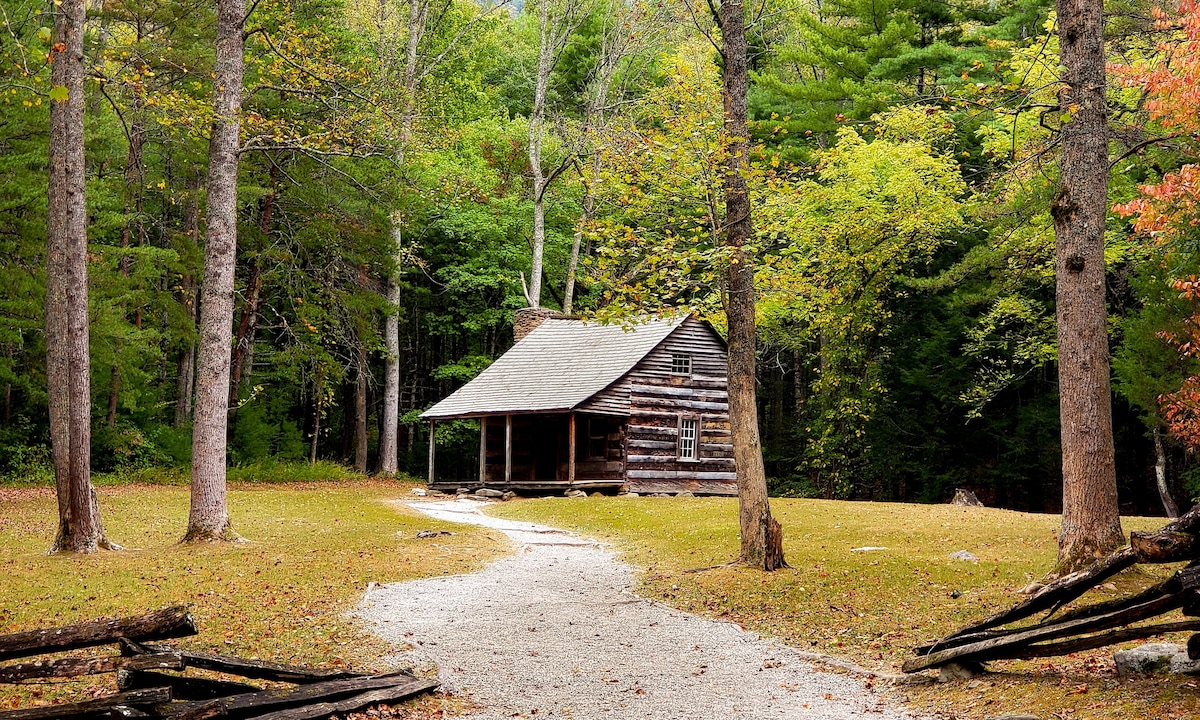
For many national park trips, a dog-friendly cabin offers the best balance of space, privacy, and convenience.
Compared with a standard hotel room, a cabin may give you more room to spread out, easier access to outdoor space, and fewer shared hallways or elevators to navigate every time your dog needs to go outside.
Cabins can be especially useful when you’re staying several nights in one gateway community.
Best For
Cabins are a strong choice for:
- Longer national park stays
- Families traveling with a dog
- Travelers with multiple dogs
- Dogs that need more space or quieter surroundings
- Road trips where you want a comfortable home base
What to Check Before Booking
Don’t assume every pet-friendly cabin offers the same flexibility.
Check the property’s rules for pet fees, number of dogs, size or breed restrictions, furniture policies, fenced areas, and unattended pets.
A listing that advertises a yard doesn’t necessarily mean the yard is fenced, and a cabin that accepts dogs doesn’t necessarily allow them to remain there while you’re inside the national park.
Location matters too. A beautiful cabin 45 minutes farther from the park may not be a bargain once you account for the additional driving every day.
For current options, compare pet-friendly cabins and cottages near your destination on Booking.com.
WTT recommendation: Choose a cabin when space and a comfortable home base matter more than having the absolute shortest drive to the park entrance.
2. RV Parks & Campgrounds
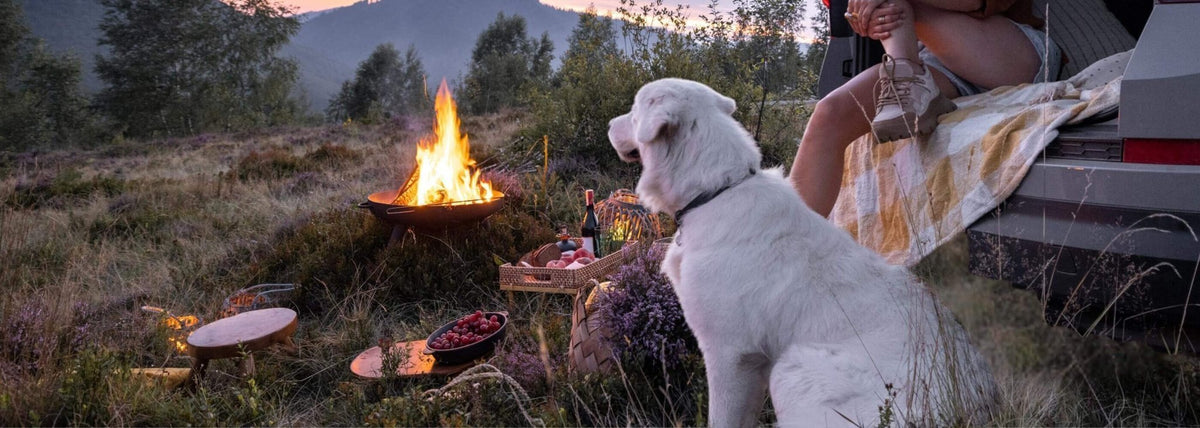
For travelers taking a multi-stop road trip, an RV can be one of the most flexible ways to visit national parks with a dog.
Your dog travels with the same sleeping space, food setup, and familiar surroundings throughout the trip, which can make moving between destinations easier than changing hotels every few nights.
RV travel also gives you access to both campgrounds inside national parks and private RV parks in gateway communities, although pet rules still apply at each campground and throughout the park.
Best For
RV travel works particularly well for:
- Multi-park road trips
- Longer trips
- Travelers who already enjoy camping
- Dogs that adjust well to RV travel
- Travelers who want the flexibility to change locations during a trip
What to Check Before Booking
A campground allowing dogs doesn’t mean your dog can go everywhere within the campground or surrounding park.
Check leash rules, pet restrictions, campground policies, available walking areas, and whether dogs may be left unattended at the campsite or inside an RV.
Temperature is especially important. An RV should never be treated as an automatically safe place to leave a dog while you’re sightseeing. Interior temperatures can become dangerous quickly if climate control fails or weather conditions change.
Also consider campground location carefully. If your itinerary covers several distant areas of a large national park, moving once during the trip may be easier than commuting from the same campsite every day.
If you don’t own an RV, compare available rentals through Outdoorsy and confirm that the specific rental allows pets before booking.
WTT recommendation: Choose an RV when you want flexibility across a longer road trip, not simply because you’re traveling with a dog. For a one- or two-night national park visit, a pet-friendly hotel or cabin may be much simpler.
3. Pet-Friendly Hotels Near Park Entrances

A pet-friendly hotel is usually the simplest option for a short national park trip, especially when you don’t need the extra space of a cabin or vacation rental.
Hotels in gateway towns can put you close to restaurants, groceries, fuel, and park entrances without requiring the setup that comes with camping or RV travel.
They’re also easy to compare across several gateway communities when you’re trying to balance park access, price, and pet policies.
Best For
Pet-friendly hotels work particularly well for:
- One- or two-night stays
- Road trips with frequent stops
- Travelers who prioritize convenience
- Dogs comfortable in hotel environments
- Trips where you don’t need a kitchen or private outdoor space
What to Check Before Booking
The words “pet-friendly” can mean very different things from one hotel to another.
Before booking, check:
- Pet fees and whether they’re charged per night or per stay
- Size, breed, or number-of-pet restrictions
- Whether specific room types are designated for pets
- Where dogs can be walked around the property
- Whether dogs may be left unattended in the room
That last rule is especially important near national parks.
If the hotel doesn’t allow unattended dogs and your park itinerary includes trails or attractions where pets aren’t permitted, you’ll need another plan for your dog during that time.
For current lodging, compare pet-friendly properties on Booking.com and Expedia, then verify the property’s current pet policy before booking.
WTT recommendation: Choose a hotel when simplicity and location matter more than extra space. For short national park stays, a well-located pet-friendly hotel can be much easier than paying for features you won’t have time to use.
4. Vacation Rentals

Vacation rentals can be one of the most comfortable options for longer national park stays, especially when you’re traveling with more than one person or more than one dog.
They often provide features you won’t get in a standard hotel room, such as a full kitchen, separate living areas, laundry, and direct outdoor access.
For a week-long trip or a vacation where you’re using one gateway community as a home base, those conveniences can make traveling with a dog considerably easier.
Best For
Vacation rentals work particularly well for:
- Longer stays
- Families or groups
- Travelers with multiple dogs
- Dogs that do better with more space
- Travelers who want a kitchen or laundry
- Trips where downtime at the lodging is part of the plan
What to Check Before Booking
Pay close attention to the property’s individual pet policy. Vacation-rental rules can vary even between properties listed on the same booking platform.
Check the number of pets allowed, size or breed restrictions, additional cleaning or pet fees, furniture rules, and whether dogs can be left unattended.
If outdoor space is important, verify exactly what the listing provides. “Private yard” does not necessarily mean “fenced yard.”
Also look carefully at location. Vacation rentals can appear close to a national park on a map while still requiring a substantial drive to the entrance or region you actually plan to visit.
Cabin vs. Vacation Rental
There’s considerable overlap between these two categories, so don’t get too caught up in the label.
Choose based on the property itself.
A cabin is often ideal when you want a quieter, more outdoors-focused stay near the park.
A vacation rental may be better when you want the conveniences of a home, particularly for a longer stay.
WTT recommendation: Choose a vacation rental when you’ll actually benefit from the extra living space and home-style amenities. For a short trip spent mostly inside the park, a simpler hotel or cabin may be the better value.
Best Areas to Stay With Dogs Near Popular National Parks
The best gateway town isn’t necessarily the one closest to the entrance. When you’re traveling with a dog, look for a base that combines reasonable park access with pet-friendly lodging, places to walk your dog, and activities you can enjoy together outside the park.
Yellowstone National Park
Yellowstone has strict pet restrictions, so your lodging location and your plan for your dog during park days are especially important.
West Yellowstone
West Yellowstone is the most versatile choice for many first-time visitors with dogs.
It has a large selection of hotels, cabins, vacation rentals, restaurants, and other services immediately outside the West Entrance. It also works well when your Yellowstone itinerary focuses on the geyser basins, Old Faithful, and the western side of the park.
Gardiner
Choose Gardiner when your itinerary emphasizes Mammoth Hot Springs, the northern part of Yellowstone, or wildlife viewing in the northern part of the park.
You’ll find pet-friendly lodging outside the North Entrance, but you’ll still need to plan carefully for park activities where your dog can’t accompany you.
Island Park
Island Park can be a good choice when space and a cabin-style stay matter more than being immediately outside a Yellowstone entrance.
The area has many cabins and vacation-style properties, but the additional driving makes it less convenient for some Yellowstone itineraries.
Related: Dog-Friendly Yellowstone Guide
Glacier National Park
Glacier’s geography makes lodging location particularly important because the park’s major regions are spread out.
Whitefish
Choose Whitefish when you want the largest selection of restaurants, services, and lodging and don’t mind additional driving to reach Glacier.
Columbia Falls
Columbia Falls is often the best compromise for travelers with dogs.
You’ll have access to groceries, restaurants, lodging, and other services while remaining closer to Glacier’s west side than you would in Whitefish.
West Glacier
Choose West Glacier when minimizing your drive to the park is the priority.
Lodging choices and services are more limited than in Whitefish or Columbia Falls, but the location is hard to beat for west-side Glacier days.
Related: Dog-Friendly Glacier National Park Guide
Grand Teton National Park
For Grand Teton, the biggest decision is usually whether you want convenient park access or more space and potentially lower lodging costs on the Idaho side of the Tetons.
Jackson
Jackson is the most convenient full-service base for many visitors. You’ll have the widest selection of hotels, restaurants, shops, and other services while remaining well positioned for Grand Teton sightseeing.
Victor
Choose Victor when you prefer a quieter base and are willing to drive over Teton Pass to reach Jackson and Grand Teton.
The trade-off is important: a lower lodging price or more spacious rental can mean considerably more driving on park days.
Driggs
Driggs offers another Idaho-side option with access to vacation rentals and outdoor recreation.
Like Victor, it works best when you’re comfortable trading immediate Grand Teton access for a different lodging experience outside Jackson.
Related: Dog-Friendly Grand Teton Guide
WTT recommendation: When traveling with a dog, don’t choose a gateway town based on price alone. Compare park drive time, pet-friendly lodging policies, nearby dog-friendly recreation, and what you’ll do with your dog during restricted park activities before choosing your base.
What “Pet-Friendly” Actually Means
One of the easiest mistakes to make when booking lodging near a national park is assuming “pet-friendly” means your dog can stay without restrictions. It usually doesn’t.
Pet policies vary by property, and the details can determine whether the lodging actually works with your park itinerary.
Before booking, check these four things.
Dog Size, Breed + Number Limits
Some properties accept dogs only under a certain weight, limit the number of pets per room, or have other restrictions.
This matters especially when you’re traveling with two or more dogs. A property appearing in a pet-friendly search doesn’t necessarily mean it can accommodate your entire group.
Pet Fees
Look at the total pet cost rather than the nightly room rate alone.
Properties may charge per pet, per night, or per stay, and cleaning fees or deposits may also apply. A cheaper room can become the more expensive option once pet charges are included.
Unattended Pet Policies
This may be the most important rule to check for a national park trip.
Many hotels and vacation rentals don’t allow dogs to remain unattended. Others permit it only when the dog is crated or under specific conditions.
If your dog can’t stay at the property and also can’t accompany you on the trail or attraction you’re visiting, the lodging doesn’t actually work for your itinerary.
Outdoor Space
Don’t assume a pet-friendly property has a convenient place for walks or bathroom breaks.
Look for easy outdoor access, nearby walking areas, and enough space to comfortably exercise your dog before and after a park day.
For cabins and vacation rentals, verify whether advertised outdoor space is actually fenced rather than assuming a yard is secure.
WTT recommendation: Before you pay for any pet-friendly lodging, answer one question:
What will my dog be doing while I’m visiting places where dogs aren’t allowed?
If the property’s rules don’t give you a workable answer, keep looking.
How Your Lodging Choice Affects Your Entire Trip
Where you stay with your dog affects much more than where you sleep. It can determine how much you drive, which activities are realistic, and how easily you can balance national park sightseeing with your dog’s needs.
Daily Driving
A less expensive cabin or vacation rental may look like a great deal until you realize it adds significant driving to every park day.
That matters even more when you’re traveling with a dog because you’ll also need time for walks, meals, bathroom breaks, and exercise before and after sightseeing.
Compare the lodging location with the park entrance and the specific region of the park you’re actually visiting—not simply the national park name on the listing.
Access to Dog-Friendly Activities
Because dogs may be restricted from many national park trails and attractions, look at what you can do outside the park together.
A gateway town with nearby dog-friendly trails, walking paths, public lands, or other outdoor recreation may work better than a property that’s slightly closer to the park but leaves you with few options for your dog.
This is particularly useful on arrival days, rest days, and evenings when you don’t want every activity to involve leaving your dog behind.
Your Park Itinerary
Your lodging also needs to work with the activities where your dog can’t accompany you.
If you plan to spend several hours hiking a trail where pets aren’t permitted, determine your dog-care plan before booking the lodging.
That might mean adjusting the itinerary, traveling with another person who can stay with the dog, or arranging appropriate local pet care where available.
Don’t assume you can simply leave your dog in a hotel room, cabin, rental, vehicle, or RV.
Flexibility
Cabins, RVs, hotels, and vacation rentals each provide a different kind of flexibility.
The best option isn’t necessarily the one with the most space or the lowest nightly price. It’s the one that fits your dog’s routine and the way you actually plan to explore the park.
WTT takeaway: Treat lodging and your dog-care plan as part of the itinerary—not as something to figure out after you’ve booked the trip.
How to Choose the Right Lodging Option
There isn’t one lodging type that’s best for every trip with a dog. The right choice depends on how long you’re staying, how much space you need, and what your national park itinerary looks like.
Choose a Cabin If…
You want more space and privacy without committing to RV travel.
Cabins work particularly well for several-night stays, families, multiple dogs, and dogs that may be more comfortable away from busy hotel hallways and shared spaces.
Choose an RV If…
You’re taking a longer road trip or visiting multiple national parks and want to keep the same setup as you move between destinations.
RV travel can provide excellent flexibility, but it only makes sense if you’re comfortable with campground logistics and have a safe plan for your dog during activities where pets aren’t allowed.
Choose a Hotel If…
Your stay is short and convenience is the priority.
A well-located pet-friendly hotel can be the easiest option for one or two nights, particularly when you’ll spend most of your time sightseeing rather than relaxing at your lodging.
Choose a Vacation Rental If…
You’re staying several nights or longer and will benefit from a kitchen, separate living space, laundry, or outdoor space.
Vacation rentals can be especially useful for families and multiple dogs, but individual pet policies need to be checked carefully.
Still Not Sure?
Start with the length and style of your trip:
Short stay + simplicity: Hotel
Several nights + more space: Cabin
Longer stay + home-style amenities: Vacation rental
Multi-stop road trip + flexibility: RV
Then compare the actual properties based on location, total price with pet fees, pet restrictions, outdoor access, and unattended-dog policies.
WTT recommendation: Don’t ask only, “Which lodging type is best for dogs?”
Ask:
“Which lodging option makes my specific national park itinerary work with my dog?”
That’s the decision that matters.
Tips for Booking Pet-Friendly Stays
Finding a property labeled pet-friendly is only the first step. Before booking, make sure the specific property’s rules actually work with your dog and your national park itinerary.
Book Early
Pet-friendly rooms, cabins, and rentals can be more limited than standard lodging, particularly during peak national park season.
If you already know your travel dates, start comparing pet-friendly options early rather than assuming you’ll be able to add a dog to any available room later.
Verify the Current Pet Policy
Don’t rely only on the pet-friendly filter in a booking search.
Read the property’s actual policy and, when something important isn’t clear, confirm it directly with the property before booking.
Pay particular attention to size or breed restrictions, the number of dogs allowed, designated pet rooms, and unattended-pet rules.
Calculate the Total Cost
Compare the final price after pet charges rather than looking only at the nightly lodging rate.
A property with a slightly higher room rate may actually cost less once per-night pet fees, per-pet charges, deposits, or cleaning fees are included.
Check the Location
Look beyond the distance to the national park entrance.
Consider how far you’ll be from the specific park areas on your itinerary, along with groceries, restaurants, dog-walking areas, and dog-friendly recreation outside the park.
Look Carefully at Outdoor Space
For longer stays, convenient outdoor access can make a significant difference.
If a cabin or vacation rental advertises a yard, verify whether it’s private, shared, fenced, or unfenced. Don’t assume “pet-friendly” means your dog can safely be off leash on the property.
Read Recent Reviews
Recent reviews from other travelers with dogs can reveal details that aren’t obvious in the property description—such as difficult outdoor access, noisy surroundings, limited walking areas, or how the property’s pet rules work in practice.
Use reviews as additional information, but the property’s current written pet policy should be your final authority.
WTT recommendation: Before clicking Book, verify location + total pet cost + pet restrictions + unattended-dog policy + outdoor access. Those five checks can prevent most lodging surprises on a national park trip.
Frequently Asked Questions
Are dogs allowed in national park lodges?
Sometimes, but pet policies vary by park and individual property. Some national park lodges allow dogs only in designated rooms or cabins, while others don’t allow pets at all.
Even when your lodging accepts dogs, that doesn’t change the park’s rules about where dogs can go. Always check both the property’s current pet policy and the national park’s pet regulations before booking.
What’s the best lodging option for traveling with a dog?
For a short trip, a pet-friendly hotel is often the simplest option. Cabins and vacation rentals can be better when you want more space or are staying several nights, while an RV can work particularly well for longer road trips and multi-park itineraries.
The best choice is ultimately the property that fits your dog’s needs and gives you a workable plan for the parts of your national park itinerary where pets aren’t allowed.
Is it better to stay outside national parks with a dog?
For many travelers, yes. Gateway communities outside national parks often provide more pet-friendly lodging choices, services, and access to dog-friendly recreation.
But don’t choose outside lodging automatically. A property farther from the park can add substantial driving, and its unattended-pet policy may still limit your itinerary. Compare the complete setup rather than simply choosing inside versus outside.
Can I leave my dog at a pet-friendly hotel while I visit the park?
Not necessarily. Many pet-friendly hotels don’t allow dogs to be left unattended, while others permit it only under certain conditions, such as when the dog is crated.
This is one of the most important policies to verify before booking a national park trip. If your dog can’t accompany you into part of the park and can’t remain at the hotel, you’ll need another appropriate dog-care plan.
Are RVs good for traveling with dogs?
They can be. RVs provide a familiar environment and can make moving between national parks easier, which is particularly useful on longer road trips.
However, an RV isn’t automatically a safe place to leave a dog unattended. Weather, interior temperature, campground rules, and the reliability of climate-control systems all need to be considered when planning activities where your dog can’t accompany you.
What should I check before booking pet-friendly lodging?
Check the property’s pet fees, number-of-pet limits, size or breed restrictions, unattended-pet policy, outdoor access, and location relative to your actual itinerary.
Don’t rely solely on a booking site’s pet-friendly filter. Read the current property policy before paying, especially if being able to leave your dog at the lodging is essential to your plans.
WTT takeaway: The best pet-friendly lodging isn’t simply a property that accepts dogs. It’s one whose rules actually work with how you plan to visit the national park.
Bottom Line
Traveling with a dog doesn’t mean you have to skip national parks, but where you stay can make or break the trip.
For most travelers, staying in a gateway community outside the park provides the best combination of pet-friendly lodging, services, outdoor space, and access to dog-friendly activities.
Choose a hotel when simplicity and location matter most.
Choose a cabin when you want more space and privacy.
Choose a vacation rental for a longer stay when you’ll benefit from a kitchen and home-style amenities.
Choose an RV when you’re taking a longer road trip and want the flexibility to move between destinations.
But the lodging type is only part of the decision.
Before booking, make sure you know:
- Where your dog is allowed inside the national park
- Whether your dog can remain at the lodging when you’re away
- What pet fees and restrictions apply
- Where you’ll walk and exercise your dog
- How the lodging location affects your daily driving
The most important question isn’t simply:
“Does this property allow dogs?”
It’s:
“Will this property actually work with my dog and the national park itinerary I’ve planned?”
Choose lodging that answers yes to both, and the entire trip becomes easier.