Glacier National Park Map Explained: 7 Areas to Know Before You Go
This post may contain affiliate links. If you book through them or make a purchase through links in this article, I may earn a small commission at no extra cost to you.
Table of Contents
Planning a trip to Glacier National Park gets much easier once you understand how the park is laid out.
Glacier isn’t organized around one convenient loop road. Instead, its most popular destinations are spread across several distinct regions, and getting from one area to another can take much longer than the map initially suggests.
That’s why choosing hikes or booking lodging before understanding the park’s geography can create problems.
You may discover that two places that look close together require significant driving, that your hotel is on the wrong side of the park for your plans, or that you’ve tried to combine too many regions into a single day.
The key is to think of Glacier as a collection of separate areas connected by a few important driving routes.
This guide breaks the Glacier National Park map into seven areas, explains what each one is best for, and shows you how to group them into a realistic itinerary without unnecessary backtracking.
Quick Answer
The seven areas to understand when planning a Glacier National Park trip are:
- West Glacier + Lake McDonald — the primary west-side gateway and a convenient starting point for Going-to-the-Sun Road.
- Going-to-the-Sun Road Corridor — the scenic route connecting the west and east sides of the park when the full road is open.
- Logan Pass — the high point of Going-to-the-Sun Road and one of Glacier’s major hiking and sightseeing areas.
- St. Mary + East Glacier Access — the eastern end of Going-to-the-Sun Road and an important base for exploring the east side.
- Many Glacier — a separate destination known for hiking, wildlife viewing, lakes, and dramatic mountain scenery.
- Two Medicine — another distinct east-side region with lakes, trails, and a quieter feel than the main Going-to-the-Sun Road corridor.
- North Fork + Polebridge — a more remote northwest section best treated as its own excursion.
The most important thing to understand is that these aren’t seven stops you should try to check off in order.
Many Glacier, Two Medicine, and North Fork are separate destinations that can require substantial driving. Going-to-the-Sun Road connects West Glacier and St. Mary when the full road is open, but it doesn’t create a convenient loop through every major part of the park.
For most trips, the better strategy is to group nearby attractions together and give major regions their own time.
WTT Tip: Before choosing where to stay, mark your highest-priority Glacier destinations on the map. Your lodging location can save—or add—hours of driving over the course of the trip.
How Glacier National Park Is Actually Laid Out
Glacier National Park makes more sense when you stop thinking of it as one large sightseeing loop.
Instead, think of the park as several distinct regions connected by a limited road network.
Going-to-the-Sun Road is the main connection between the west and east sides when the full road is open. It runs from the West Glacier/Lake McDonald area across Logan Pass to St. Mary.
But it does not directly connect every major area of the park.
Many Glacier sits north of the St. Mary area and requires its own drive.
Two Medicine is farther south on the east side and is also a separate destination.
North Fork and Polebridge are northwest of the main West Glacier corridor and require another detour away from the park’s most heavily traveled route.
This creates one of Glacier’s biggest planning traps:
Places that appear relatively close on a map aren’t necessarily convenient to combine.
Think in Regions, Not Attractions
Instead of building your itinerary by making a list of individual sights, start by deciding which regions matter most.
For example, Hidden Lake Overlook and Logan Pass naturally belong together because they’re in the same area.
Lake McDonald and Apgar fit naturally into a west-side day.
Grinnell Glacier and Swiftcurrent Lake belong to a Many Glacier day.
Trying to combine attractions from several different regions can leave you spending far more of the day driving than expected.
Going-to-the-Sun Road Changes the Map
There’s another important complication: the complete Going-to-the-Sun Road is seasonal.
When the alpine section is open, West Glacier and St. Mary are connected directly through the park.
When it isn’t, you can’t simply drive across Logan Pass. Reaching the opposite side requires a much longer route outside the park.
That means the Glacier map effectively changes depending on when you visit and which roads are open.
Before building any itinerary around Going-to-the-Sun Road, verify current road conditions and seasonal access for your travel dates.
WTT Tip: Don’t calculate Glacier drive times using straight-line distance. Identify the actual road connecting two places first. That’s especially important when combining west-side, east-side, Many Glacier, Two Medicine, or North Fork plans.
1. West Glacier + Lake McDonald

For many first-time visitors, West Glacier is the easiest place to understand on the map.
West Glacier sits near the park’s western entrance and provides access to Apgar, Lake McDonald, and the western end of Going-to-the-Sun Road.
It’s also one of Glacier’s most convenient areas for lodging, restaurants, groceries, and other traveler services outside the park.
What You’ll Find Here
Lake McDonald is the centerpiece of the west side. The lake stretches for roughly 10 miles, with Apgar near its southern end and Lake McDonald Lodge farther north along Going-to-the-Sun Road.
This area works particularly well for:
- First-time visitors
- Lake views and easy scenic stops
- Access to Going-to-the-Sun Road
- Travelers staying on the west side
- Arrival or departure days when you don’t want a complicated itinerary
Why Your Location Matters
“Staying near Glacier” doesn’t necessarily mean you’re conveniently located for everything in Glacier.
A West Glacier base is excellent for Lake McDonald and the west side of Going-to-the-Sun Road, but it can mean substantial driving when your plans include separate regions such as Many Glacier or Two Medicine.
That’s why West Glacier is best thought of as a west-side base, not a central location for the entire park.
If most of your highest-priority activities are on the east side, staying here for your entire trip may create more backtracking than necessary.
Don’t Overload Your West-Side Day
Lake McDonald and Apgar are easy to combine with Going-to-the-Sun Road, but that doesn’t mean you need to rush through them on your way somewhere else.
A slower west-side day can include time along the lake, scenic stops, short walks, and the lower sections of Going-to-the-Sun Road without trying to cross the entire park.
WTT Tip: If you’re spending several days in Glacier and want significant time on both sides of the park, consider splitting your lodging between west and east rather than treating West Glacier as the base for every day.
2. Going-to-the-Sun Road Corridor

Going-to-the-Sun Road is the main east-west route through Glacier National Park and the road that helps most visitors make sense of the park’s central corridor.
When the full road is open, it connects the West Glacier and Lake McDonald area with Logan Pass and continues east to St. Mary.
But Going-to-the-Sun Road is more than transportation between two sides of the park.
Driving it is one of Glacier’s major experiences.
What You’ll Find Along the Route
The road passes through dramatically different landscapes as it climbs from the lower elevations near Lake McDonald into Glacier’s alpine terrain.
Depending on your direction and stops, you’ll encounter places such as Lake McDonald, Avalanche, The Loop, Logan Pass, Jackson Glacier Overlook, and viewpoints above St. Mary Lake.
This is why a drive that looks relatively short on a map can occupy much of the day.
You’re not simply getting from West Glacier to St. Mary. You’re likely stopping for viewpoints, short walks, photographs, hikes, and time at Logan Pass.
Don’t Treat It Like a Shortcut
One of the biggest map mistakes is using Going-to-the-Sun Road as though it’s simply the fastest road between the west and east sides.
During the main visitor season, traffic, parking, construction, wildlife, weather, and sightseeing stops can all affect how long the drive takes.
The alpine section is also seasonal. Opening and closing dates vary with snow, weather, and road conditions, so never build a trip around crossing the park without confirming that the complete road is open.
RVs and Larger Vehicles Need Extra Planning
Going-to-the-Sun Road also has vehicle-size restrictions on its narrow alpine section.
Vehicles or vehicle combinations longer than 21 feet or wider than 8 feet are prohibited between Avalanche Creek and Rising Sun. Vehicles over 10 feet tall may also have difficulty in sections with rock overhangs. If you’re traveling in an RV or larger vehicle. check current NPS restrictions before building your route.
For more detailed planning, see Is Going-to-the-Sun Road Worth It?.
WTT Tip: Give Going-to-the-Sun Road enough time to be part of the day’s experience. If your itinerary requires you to drive straight across the park without stopping in order to stay on schedule, you’ve probably planned too much.
3. Logan Pass

Logan Pass sits along Going-to-the-Sun Road near the Continental Divide and is one of the most popular stops in Glacier National Park.
On the map, it can look like just another viewpoint along the road.
In reality, Logan Pass is a destination of its own, particularly if hiking is part of your plans.
Why Logan Pass Matters
Logan Pass provides access to some of Glacier’s best-known alpine scenery and trails, including:
- Hidden Lake Overlook
- Highline Trail
- Alpine meadows and mountain views
- Frequent opportunities to see wildlife
Because of its location, Logan Pass also works naturally as part of a Going-to-the-Sun Road day.
What doesn’t work well is treating it like a guaranteed quick stop.
Parking Can Change Your Plans
Logan Pass parking is limited and demand is high during the summer.
2026 Logan Pass Update: From July 1 through September 7, private-vehicle parking at Logan Pass is limited to a maximum of three hours, 24 hours a day. Glacier National Park does not require vehicle reservations in 2026. Visitors planning longer hikes from Logan Pass should review the park’s ticketed Logan Pass shuttle options and current transportation information before their trip.
That matters when planning longer hikes.
If your plans require more time than the parking limit allows, don’t build the day around leaving a private vehicle at Logan Pass.
Glacier’s shuttle system can be a better option for some itineraries, but shuttle schedules, stops, ticket requirements, and seasonal operations should always be checked for your specific travel dates.
Don’t Build the Entire Day Around Finding a Parking Space
The map can’t show you whether a parking space will be available when you arrive.
That’s why your Glacier plan should include some flexibility rather than depending on arriving at Logan Pass at one exact time and immediately finding parking.
If Logan Pass is one of your highest priorities, decide how you’re getting there before the trip rather than treating transportation as an afterthought.
WTT Tip: Logan Pass may be geographically in the middle of Going-to-the-Sun Road, but don’t treat it as a simple halfway stop. Hiking plans, parking rules, shuttle logistics, weather, and crowds can make it one of the most planning-intensive parts of your Glacier day.
4. St. Mary + East Glacier Access

St. Mary sits at the eastern end of Going-to-the-Sun Road and is one of the most important locations to understand when planning time on Glacier’s east side.
If West Glacier is the primary gateway to the west side, St. Mary plays a similar role for the Going-to-the-Sun Road corridor from the east.
But there’s an important map distinction:
St. Mary is not the entrance to Many Glacier.
Many Glacier is a separate region farther north with its own access road. Staying near St. Mary can put you closer to Many Glacier than staying on the west side, but you’ll still need to drive between the two areas.
What You’ll Find Near St. Mary
The St. Mary side works particularly well for travelers interested in:
- St. Mary Lake
- Wild Goose Island Overlook
- The eastern side of Going-to-the-Sun Road
- Logan Pass access from the east
- East-side scenery and hiking
- Positioning yourself closer to Many Glacier and Two Medicine than you would be from West Glacier
The landscape also feels noticeably different from the heavily forested west side, with more open views across the mountains and valleys.
Why St. Mary Can Be a Strategic Base
If your itinerary includes several east-side priorities, staying near St. Mary can reduce the amount of time you spend repeatedly crossing the park.
This becomes especially important on trips that include both Going-to-the-Sun Road and Many Glacier.
Instead of thinking:
West Glacier → everything else
think:
West-side activities → west-side lodging
East-side activities → east-side lodging
For longer trips, splitting your stay between the two sides can make the park feel considerably easier to explore.
Don’t Confuse St. Mary With East Glacier Park Village
Another map detail that can trip up first-time visitors is the name East Glacier Park Village.
Despite the name, East Glacier Park Village is farther south and is not the same location as the St. Mary entrance.
That distinction matters when booking lodging. A property advertised as being near “East Glacier” may not be conveniently located for the Going-to-the-Sun Road plans you have in mind.
For a full breakdown of the lodging areas, see Where to Stay in Glacier National Park.
WTT Tip: When comparing Glacier lodging, don’t rely on labels like “east side” or “near Glacier.” Put the property on the map and compare it with the entrance and region you expect to use most often.
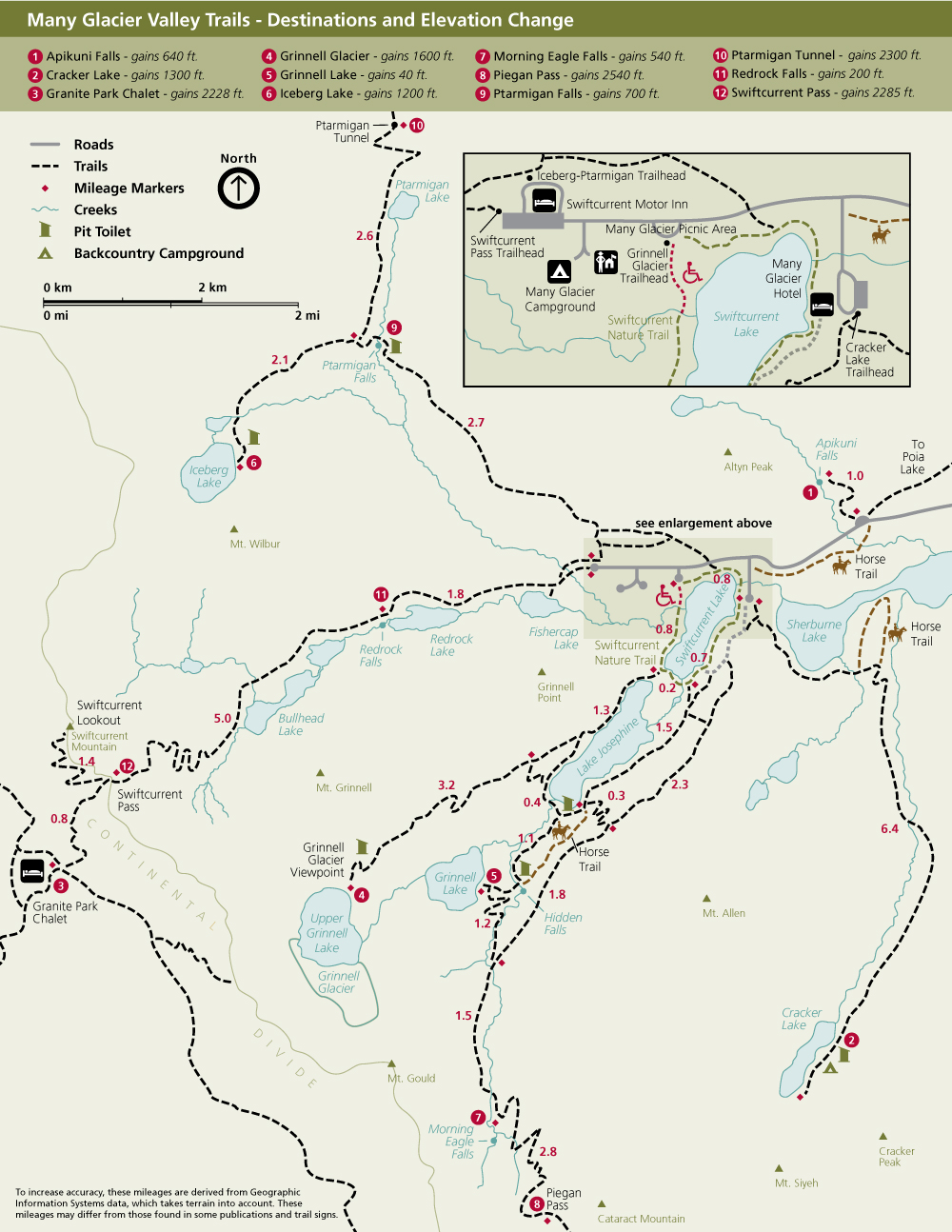
5. Many Glacier

Many Glacier is one of Glacier National Park’s most spectacular regions—and one of the most important areas to understand separately on the map.
It is not directly on Going-to-the-Sun Road.
To reach Many Glacier, you’ll leave the main St. Mary corridor and travel north toward the Many Glacier entrance. That separation is why trying to squeeze Many Glacier into an already-full Going-to-the-Sun Road day often creates a rushed itinerary.
Why Many Glacier Deserves Its Own Time
Many Glacier is especially well known for:
- Grinnell Glacier and other major hiking trails
- Swiftcurrent Lake
- Many Glacier Hotel
- Mountain and lake scenery
- Wildlife-viewing opportunities
For hikers, this may be one of the highest-priority regions in the entire park.
Even travelers who aren’t planning a major hike can easily spend several hours here exploring the lakes, viewpoints, and surrounding scenery.
Don’t Treat Many Glacier as a Quick Detour
This is where understanding the map can save you from a major planning mistake.
Many Glacier may appear reasonably close to St. Mary, but reaching it, finding parking, completing a hike or other activity, and then driving to another part of Glacier can consume much more of the day than expected.
If you’re planning a substantial hike such as Grinnell Glacier, give Many Glacier the day rather than attaching it to several other regions.
A shorter visit can sometimes be combined with another east-side activity, but it shouldn’t be added simply because there appears to be room on the itinerary.
Wildlife Is a Bonus, Not a Schedule
Many Glacier is one of Glacier’s well-known wildlife areas, but sightings are never guaranteed.
If you encounter wildlife, follow current park-distance requirements and never approach an animal for a photograph.
Your itinerary should work whether wildlife appears or not.
Where You Stay Makes a Difference
Many Glacier is also one of the strongest arguments for considering an east-side stay.
Driving here from West Glacier can add substantial travel time, particularly if you’re returning west again that evening.
If Many Glacier is one of your highest priorities, look at the map before automatically booking every night near West Glacier.
WTT Tip: If you’re hiking in Many Glacier, build the day around the hike and the region—not around how many other Glacier attractions you can squeeze in afterward.
6. Two Medicine
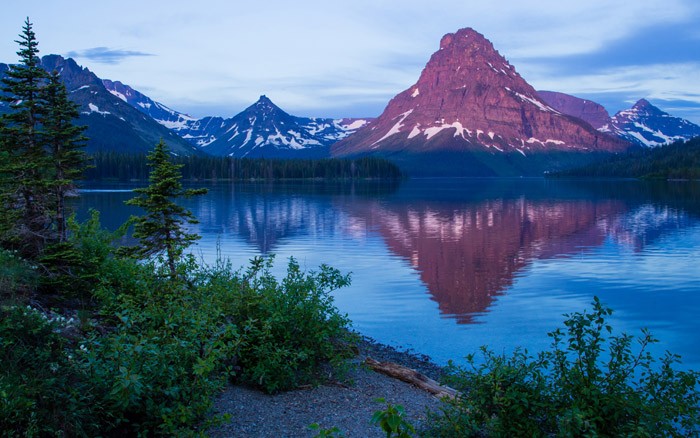
Two Medicine sits in the southeastern portion of Glacier National Park, separate from both the Going-to-the-Sun Road corridor and Many Glacier.
That separation is exactly why it deserves its own place on the map.
Visitors sometimes assume they can easily add Two Medicine to an east-side day because it looks relatively close to other Glacier destinations. In reality, reaching it requires leaving the main St. Mary corridor and driving south.
Why Visit Two Medicine?
Two Medicine is known for:
- Two Medicine Lake
- Mountain and lake scenery
- Hiking trails
- Waterfalls and shorter walks
- A generally slower-paced experience than Glacier’s busiest corridors
It’s a particularly good choice if you want another hiking and scenery day without automatically returning to Logan Pass or Many Glacier.
Two Medicine Is Better Treated as a Region
Don’t think of Two Medicine as one attraction that you drive to, photograph, and leave.
The value of this area comes from spending time here.
Depending on your plans, you might combine the lake with a hike, explore several shorter trails, or simply make this a quieter day between more demanding hiking days elsewhere in the park.
That makes Two Medicine particularly useful on trips of four days or longer, when you have enough time to explore beyond Glacier’s highest-priority first-time stops.
Important for 2026
Two Medicine Campground is closed for the entire 2026 season.
That does not mean the Two Medicine region itself is closed. You can still include Two Medicine in your sightseeing and hiking plans, but don’t build a 2026 itinerary around camping at Two Medicine Campground.
Check current National Park Service conditions before your visit because construction may also affect road, facility, or trail access during portions of the season.
Don’t Confuse Two Medicine With Many Glacier
Both are east-side regions with excellent hiking and mountain scenery, but they are not adjacent areas that naturally function as one destination.
If you have limited time and are deciding between them, Many Glacier will usually be the higher priority for a first trip.
With additional time, Two Medicine adds a very different—and worthwhile—part of Glacier to the itinerary.
WTT Tip: Don’t add Two Medicine simply because you see open space on an east-side day. Decide whether you actually have enough time to experience the region rather than just drive there and back.
7. North Fork + Polebridge

The North Fork is Glacier’s remote northwest region, and it feels very different from the Going-to-the-Sun Road corridor.
Polebridge sits outside the park and serves as a familiar landmark for visitors heading toward the North Fork entrances and destinations such as Bowman Lake and Kintla Lake.
On the map, the North Fork doesn’t look impossibly far from West Glacier.
But this is another place where distance on the map doesn’t tell the whole story.
Why the North Fork Is Different
The North Fork is best suited to travelers looking for:
- A more remote Glacier experience
- Bowman or Kintla Lake
- Hiking away from the park’s main corridor
- Fewer services and less-developed surroundings
- A dedicated day away from Glacier’s busiest areas
The appeal is precisely that it isn’t as developed or convenient as West Glacier, Logan Pass, or St. Mary.
That also means it requires more preparation.
Road Conditions Matter Here
North Fork roads can be rough, dusty, narrow, or slow depending on the route and current conditions.
Don’t calculate travel time to Bowman Lake or Kintla Lake using mileage alone.
Your vehicle matters too. Before taking a rental vehicle into the North Fork, check the rental agreement for any road restrictions and confirm current park road conditions.
This isn’t the region where you want to discover that your planned route isn’t appropriate for your vehicle.
Services Are Limited
Once you head farther into the North Fork, don’t expect the same access to fuel, food, cell service, or other traveler services that you’ll find around Glacier’s more developed gateways.
Start the day prepared with the fuel, water, food, and supplies you expect to need.
Is North Fork Worth It for a First Trip?
It can be—but I wouldn’t automatically include it.
If you have only two or three days in Glacier, your time will usually be better spent prioritizing Going-to-the-Sun Road, Logan Pass, and Many Glacier.
With four or more days, North Fork becomes much easier to consider, especially if remote scenery and a less-developed part of the park appeal to you.
Repeat visitors may appreciate it even more because it offers a completely different Glacier experience.
Give It Its Own Day
North Fork is not something I’d casually add to a West Glacier afternoon because it appears nearby on the map.
If Bowman Lake, Kintla Lake, or the North Fork itself is important to you, treat the region as a destination and give it appropriate time.
WTT Tip: North Fork is a perfect example of why Glacier planning should be based on actual roads and travel conditions—not the visual distance between two points on a map.
How to Group Glacier’s Regions by Day
Once you understand the seven areas, the next step is deciding which ones actually belong together.
The goal isn’t to visit every region on every Glacier trip.
It’s to group places that make geographic sense while avoiding unnecessary backtracking.
West-Side Day
A west-side day naturally combines:
West Glacier + Apgar + Lake McDonald + the western portion of Going-to-the-Sun Road
Depending on your plans, you can continue farther along Going-to-the-Sun Road, but don’t assume you need to cross the entire park simply because the road is open.
Going-to-the-Sun Road + Logan Pass Day
For most first-time visitors, these belong together.
Build the day around:
Going-to-the-Sun Road + Logan Pass + scenic stops along the corridor
If you’re completing a substantial hike from Logan Pass, reduce the number of additional stops you expect to make that day.
Many Glacier Day
If you’re hiking Grinnell Glacier or completing another longer hike, Many Glacier should generally be the primary destination for the day.
You may have time for other nearby activities, but don’t build the itinerary around racing to another major Glacier region afterward.
Two Medicine Day
Two Medicine works best as its own hiking and scenery day.
It can sometimes be combined with other southeastern Glacier stops, but I wouldn’t routinely pair it with Many Glacier or a full Going-to-the-Sun Road day.
North Fork Day
Treat North Fork as a dedicated excursion from the west side.
Bowman Lake, Kintla Lake, Polebridge, road conditions, and slower travel can easily turn this into a full-day experience.
What About St. Mary?
St. Mary is slightly different because it functions as both a destination and an east-side gateway.
It naturally fits into a Going-to-the-Sun Road day, especially when you’re traveling from east to west or finishing a west-to-east crossing.
It can also work as an east-side lodging base for a trip that includes separate days in Many Glacier and other eastern areas.
A Simple 3-Day Example
For a first Glacier trip, a geographically sensible three-day framework might look like:
Day 1: Going-to-the-Sun Road + Logan Pass
Day 2: Many Glacier
Day 3: West-side activities, Two Medicine, or another priority region based on your interests and lodging
Notice that Day 3 isn’t automatically assigned.
That’s intentional.
A hiker may choose Two Medicine. A traveler staying west may want more time around Lake McDonald. Someone who loved Going-to-the-Sun Road may want another day along the corridor.
The map should help you make those decisions—not force everyone into the same itinerary.
For a complete itinerary, see 3 Days in Glacier National Park.
WTT Tip: Build your Glacier itinerary in layers: choose the region first, then the major activity, and only then add smaller stops nearby. That’s much more reliable than creating a long attraction list and trying to connect it afterward.
How Your Lodging Changes the Map
Where you stay in Glacier National Park can change the entire feel of your itinerary.
A hotel may look “close to Glacier” when you’re booking it, but what really matters is how close it is to the part of Glacier you plan to explore that day.
There isn’t one lodging location that’s equally convenient for West Glacier, Logan Pass, Many Glacier, Two Medicine, and North Fork.
Staying on the West Side
West Glacier, Apgar, and nearby communities work particularly well if your priorities include:
- Lake McDonald
- The western side of Going-to-the-Sun Road
- North Fork access
- More lodging, dining, and service options outside the park
The tradeoff is driving time when you dedicate days to Many Glacier or other east-side destinations.
Staying on the East Side
St. Mary and other east-side lodging can make more sense when your plans emphasize:
- The eastern side of Going-to-the-Sun Road
- Logan Pass from the east
- Many Glacier
- Multiple east-side hiking days
The tradeoff is fewer lodging and dining choices compared with the more developed west-side gateway areas.
Splitting Your Stay Can Save Driving
If you have several days in Glacier and want substantial time on both sides of the park, changing lodging once can actually simplify the trip.
For example, you might spend the first portion of the trip on the west side for Lake McDonald and western Glacier, then move east for Going-to-the-Sun Road, Many Glacier, and other east-side priorities.
That does mean packing and changing accommodations once.
But it can also eliminate repeated long drives across or around the park.
Don’t Choose Lodging by Price Alone
A cheaper room isn’t necessarily a better value if its location adds hours of driving to your itinerary.
Before booking, compare the property on the map with your two or three highest-priority Glacier destinations.
That’s a much better way to evaluate lodging than simply searching for accommodations “near Glacier National Park.”
For a detailed breakdown, see Where to Stay in Glacier National Park.
WTT Tip: Choose your Glacier priorities first and your lodging second. The right base can save more time than almost any other itinerary decision you make.
What to Prioritize With 1, 2, 3, or 4+ Days
The Glacier map becomes especially useful when you’re deciding what to leave out.
You don’t need to visit every region to have a great trip. Your priorities should change based on how many full days you actually have in the park.
If You Have 1 Day
Focus almost entirely on the Going-to-the-Sun Road corridor.
For most first-time visitors, that means Lake McDonald, Going-to-the-Sun Road, Logan Pass, and east-side scenic stops if the full road is open and your timing allows.
Don’t try to add Many Glacier, Two Medicine, or North Fork simply to say you visited them.
For a realistic route, use my 1 Day in Glacier National Park Itinerary.
If You Have 2 Days
Use one day for Going-to-the-Sun Road + Logan Pass and give the second day to another high-priority region.
For many first-time visitors, that second region will be Many Glacier.
If hiking isn’t a major priority, you could instead spend more time exploring Lake McDonald and the west side or choose another region that better matches your interests.
If You Have 3 Days
Three days gives you enough time to slow the trip down.
A strong framework is:
Day 1: Going-to-the-Sun Road + Logan Pass
Day 2: Many Glacier
Day 3: Your next priority
That third day could be Two Medicine, additional hiking, more time on the west side, or another area you didn’t have enough time to enjoy earlier.
The important part is that you’re no longer trying to make every region fit into the same day.
For more detail, see 3 Days in Glacier National Park.
If You Have 4+ Days
This is where the Glacier map really starts working in your favor.
With four or more days, you can include the major first-time priorities while adding places such as Two Medicine or North Fork without sacrificing an entire day somewhere else.
You also have room for longer hikes, slower mornings, weather adjustments, wildlife-viewing opportunities, and additional time in a region you particularly enjoy.
You still don’t need to visit all seven areas.
More days should give you more depth, not simply a longer checklist.
The Priority Order Isn’t the Same for Everyone
A first-time visitor focused on scenery may prioritize Going-to-the-Sun Road and Logan Pass.
A serious hiker may put Many Glacier near the top.
Someone seeking quieter, less-developed areas may value Two Medicine or North Fork more highly.
That’s why the map should be used as a decision-making tool rather than a checklist.
WTT Tip: If adding another Glacier region means taking meaningful time away from a place you’re genuinely excited to explore, leave it for another trip. Seeing fewer areas well is usually better than spending the vacation driving between all of them.
Common Glacier Map Mistakes
Understanding Glacier’s major regions helps, but a few planning mistakes can still turn a reasonable itinerary into a day dominated by driving, parking, and backtracking.
Trying to Combine Too Many Regions
This is the biggest mistake.
Going-to-the-Sun Road, Many Glacier, Two Medicine, and North Fork are not four stops on one convenient sightseeing loop.
They are separate parts of the park that deserve their own planning time.
Trying to combine Many Glacier with a full Going-to-the-Sun Road day—or adding North Fork because it looks close to West Glacier—can leave you spending more time moving between places than experiencing them.
Better approach: Choose one primary region or corridor for the day and add nearby activities only if they fit naturally.
Underestimating Drive Times
Glacier distances can be deceptive.
Mountain roads, construction, wildlife, traffic, scenic stops, parking, and slower road sections can all make a drive take longer than expected.
Going-to-the-Sun Road is the clearest example. The point isn’t to cross it as quickly as possible. Much of the reason you’re there is to stop and experience what is along the way.
Better approach: Treat map estimates as a starting point, then build additional time into any day involving significant driving.
Choosing Lodging Before Choosing Your Priorities
A property can be close to a park entrance and still be inconvenient for most of your itinerary.
If you’ve already decided that Many Glacier is your highest priority, for example, repeatedly driving from the west side may not make sense.
Better approach: Choose your two or three highest-priority regions first, then evaluate lodging based on those locations.
Assuming Going-to-the-Sun Road Is Always Open
The alpine portion of Going-to-the-Sun Road is seasonal.
If your itinerary depends on driving directly between West Glacier and St. Mary, road status can completely change your plan.
When the full road isn’t open, reaching the opposite side can require a considerably longer drive outside the park.
Better approach: Check current road status before your trip and have a plan that works for the conditions during your actual travel dates.
Treating Logan Pass Like a Quick Stop
Logan Pass looks like a convenient midpoint on the map, but parking, transportation logistics, hiking plans, weather, and current access rules can make it one of the most planning-intensive stops in the park.
Better approach: Decide in advance how Logan Pass fits into the day and how you’ll get there.
Confusing St. Mary, Many Glacier, and East Glacier Park Village
These names all appear on Glacier’s east side, but they are not interchangeable locations.
St. Mary is at the eastern end of Going-to-the-Sun Road. Many Glacier is a separate region farther north. East Glacier Park Village is farther south.
Confusing them can lead to lodging or itinerary choices that add significant driving.
Better approach: Always locate the exact entrance, lodging property, trailhead, or destination on the map before booking.
Planning Every Day to Maximum Capacity
Even a geographically efficient itinerary can fall apart if every day depends on perfect timing.
Weather changes. Roads slow down. Parking takes time. A hike may take longer than expected. You may simply find somewhere you’d like to stay longer.
Better approach: Leave enough room in the itinerary for Glacier to be unpredictable.
WTT Tip: A good Glacier itinerary isn’t the one that connects the most dots on the map. It’s the one that minimizes unnecessary movement while giving your highest-priority places enough time.
Frequently Asked Questions
Is Glacier National Park easy to navigate?
Glacier is relatively easy to navigate once you understand its major regions, but planning the route is more complicated than simply following a map from attraction to attraction. Going-to-the-Sun Road connects the west and east sides when the full road is open, while Many Glacier, Two Medicine, and North Fork require separate drives. The key is grouping nearby destinations rather than trying to move between several regions in one day.
Do you need a map for Glacier National Park?
Yes. A Glacier National Park map is useful for much more than navigation. It helps you understand which attractions belong together, choose the right lodging location, estimate realistic driving time, and identify areas that require separate trips. Use the official park map along with current road and access information when building your itinerary.
What is the main road through Glacier National Park?
Going-to-the-Sun Road is the primary scenic road connecting the West Glacier/Lake McDonald area with Logan Pass and St. Mary when the complete road is open. The alpine section is seasonal. Opening and closing dates vary with snow, weather, and road conditions, so never build a trip around crossing the park without checking the current Going-to-the-Sun Road status before your visit.
Are Many Glacier and Going-to-the-Sun Road connected?
Not directly. Many Glacier is a separate region north of the St. Mary area and requires its own access route. You can travel between Many Glacier and the Going-to-the-Sun Road corridor, but Many Glacier shouldn’t be treated as another stop directly along Going-to-the-Sun Road.
Which side of Glacier National Park is best to stay on?
It depends on what you want to see. The west side is convenient for Lake McDonald, western Going-to-the-Sun Road, and North Fork access. The east side can be more convenient for Many Glacier and eastern Going-to-the-Sun Road priorities. If you have several days and want substantial time on both sides, splitting your stay can reduce backtracking.
For more help choosing a base, see Where to Stay in Glacier National Park
What is the most scenic area of Glacier National Park?
There isn’t one universally best area. Logan Pass offers dramatic alpine scenery, Many Glacier combines mountains, lakes, hiking, and wildlife-viewing opportunities, and Going-to-the-Sun Road provides some of the park’s most famous roadside views. Your best choice depends on whether you’re prioritizing hiking, scenic driving, lakes, or quieter areas.
Can you see Glacier National Park in one day?
Yes, but you cannot realistically experience every major region in one day. For a first visit, concentrate on the Going-to-the-Sun Road corridor, Lake McDonald, Logan Pass, and selected scenic stops if road conditions and seasonal access allow. Save Many Glacier, Two Medicine, and North Fork for a longer trip.
Use my 1 Day in Glacier National Park Itinerary for a realistic one-day plan.
How many days do you need in Glacier National Park?
For most first-time visitors, three to five days provides a much better experience than trying to see the park in one or two days. That gives you time for Going-to-the-Sun Road and Logan Pass, a separate Many Glacier day, and additional time for hiking, Two Medicine, the west side, or another priority without making every day a long driving day.
WTT Tip: If you’re unsure how many days you need, choose your must-see Glacier regions first. The map will usually make it obvious whether your itinerary needs another day.
Bottom Line
A Glacier National Park map is useful for much more than figuring out which road to take.
It’s one of the best tools for deciding where to stay, which areas belong together, and how much you can realistically fit into each day.
The most important thing to remember is that Glacier isn’t one continuous sightseeing loop.
West Glacier and Lake McDonald, Going-to-the-Sun Road, Logan Pass, St. Mary, Many Glacier, Two Medicine, and North Fork each fit into the trip differently. Some connect naturally. Others require dedicated driving and are better treated as separate destinations.
Once you understand that layout, Glacier becomes much easier to plan.
Instead of asking:
“How many attractions can I fit into one day?”
ask:
“Which region am I exploring today, and what fits naturally within it?”
That one change can reduce unnecessary driving, make lodging decisions easier, and give you more time to actually experience the park.
WTT Tip: Plan Glacier from the map outward: choose your priority regions, choose your lodging, assign regions to days, and then add hikes and attractions. That’s much easier than building a long wish list first and trying to make the geography work afterward.
Plan Your Next Trip
Ready to turn the map into an actual trip? The Glacier Travel Planning System helps you organize your route, lodging, daily plans, and trip details in one place.
Then use these guides to build the rest of your trip:
- Glacier National Park Travel Guide
- 1 Day in Glacier National Park
- 3 Days in Glacier National Park
- Where to Stay in Glacier National Park
- Best Hikes in Glacier National Park