Can You Bring Dogs to Yellowstone? 5 Important Restrictions Most People Miss
This post may contain affiliate links. If you purchase or book through them, I may earn a small commission at no extra cost to you. I only recommend products and services that genuinely improve the Yellowstone experience.
Table of Contents
Can you bring dogs to Yellowstone National Park?
Yes—but Yellowstone is one of those destinations where bringing your dog can significantly change the way you experience the park.
Dogs are allowed in certain developed areas, but they aren’t permitted on hiking trails, boardwalks, in thermal areas, or in the backcountry. That means many of Yellowstone’s most famous experiences—including geothermal boardwalks and most hikes—aren’t places you can explore with your dog.
This doesn’t mean you can’t visit Yellowstone with a dog. It means you need to understand the restrictions before deciding whether bringing your pet makes sense for the type of trip you’re planning.
Here’s exactly where dogs are allowed, where they aren’t, and when I’d consider bringing one.
Quick Answer: Can You Bring Dogs to Yellowstone?
Yes, dogs are allowed in Yellowstone National Park, but access is very limited.
According to the National Park Service, pets must remain within 100 feet of roads, parking areas, and campgrounds. They must also be physically controlled at all times—in a vehicle, crate, or on a leash no longer than six feet.
| Dogs Can Go | Dogs Cannot Go |
|---|---|
| Campgrounds | Hiking trails |
| Parking areas | Boardwalks |
| Developed areas near roads | Thermal areas |
| Within 100 feet of roads | Backcountry |
| Other specifically permitted developed areas | Most major walking attractions |
Pets cannot be carried into prohibited areas either. Putting your dog in a stroller, backpack, carrier, or your arms does not allow you to take them onto thermal boardwalks or trails.
Planning takeaway: If hiking and Yellowstone’s geothermal attractions are major priorities, bringing your dog will substantially limit your trip.
Official Yellowstone pet regulations
Why Yellowstone Has Strict Rules for Dogs

Yellowstone’s pet restrictions aren’t simply about keeping dogs off trails.
The park combines abundant wildlife with dangerous thermal features. Bears, coyotes, bison, elk, wolves, and other wildlife live freely throughout Yellowstone, while thermal areas can contain extremely hot water beneath ground that may appear solid.
NPS says its pet policies are designed to protect pets from predators and thermal features, prevent disease exchange between domestic animals and wildlife, and protect the experience of other visitors.
This is why Yellowstone needs to be approached differently from a typical dog-friendly outdoor destination.
1. Dogs Aren’t Allowed on Yellowstone Hiking Trails
This is one of the biggest limitations for travelers who normally hike with their dogs.
Pets are not permitted on Yellowstone’s hiking trails or in the backcountry. That means you can’t simply choose a shorter or easier Yellowstone hike and bring your dog along.
If hiking is an important part of your Yellowstone itinerary, you’ll need another plan for your dog during those portions of your trip.
Yellowstone does not operate kennels inside the park, although NPS notes that boarding services are available in surrounding communities.
2. Dogs Aren’t Allowed on Yellowstone’s Thermal Boardwalks

Pets are prohibited in Yellowstone’s thermal areas and on boardwalks.
That restriction applies even if your dog is on a leash, being carried, riding in a stroller, or inside a backpack or carrier.
This affects some of Yellowstone’s most famous sightseeing areas, including geothermal basins around attractions such as Old Faithful and Grand Prismatic Spring.
The restriction exists for good reason. Thermal areas can contain superheated water, and NPS specifically warns that pets can be seriously injured or killed in hot springs.
If geothermal features are one of the main reasons you’re visiting Yellowstone, this is probably the most important dog restriction to understand before your trip.
3. Yellowstone Wildlife Creates Additional Risk for Dogs
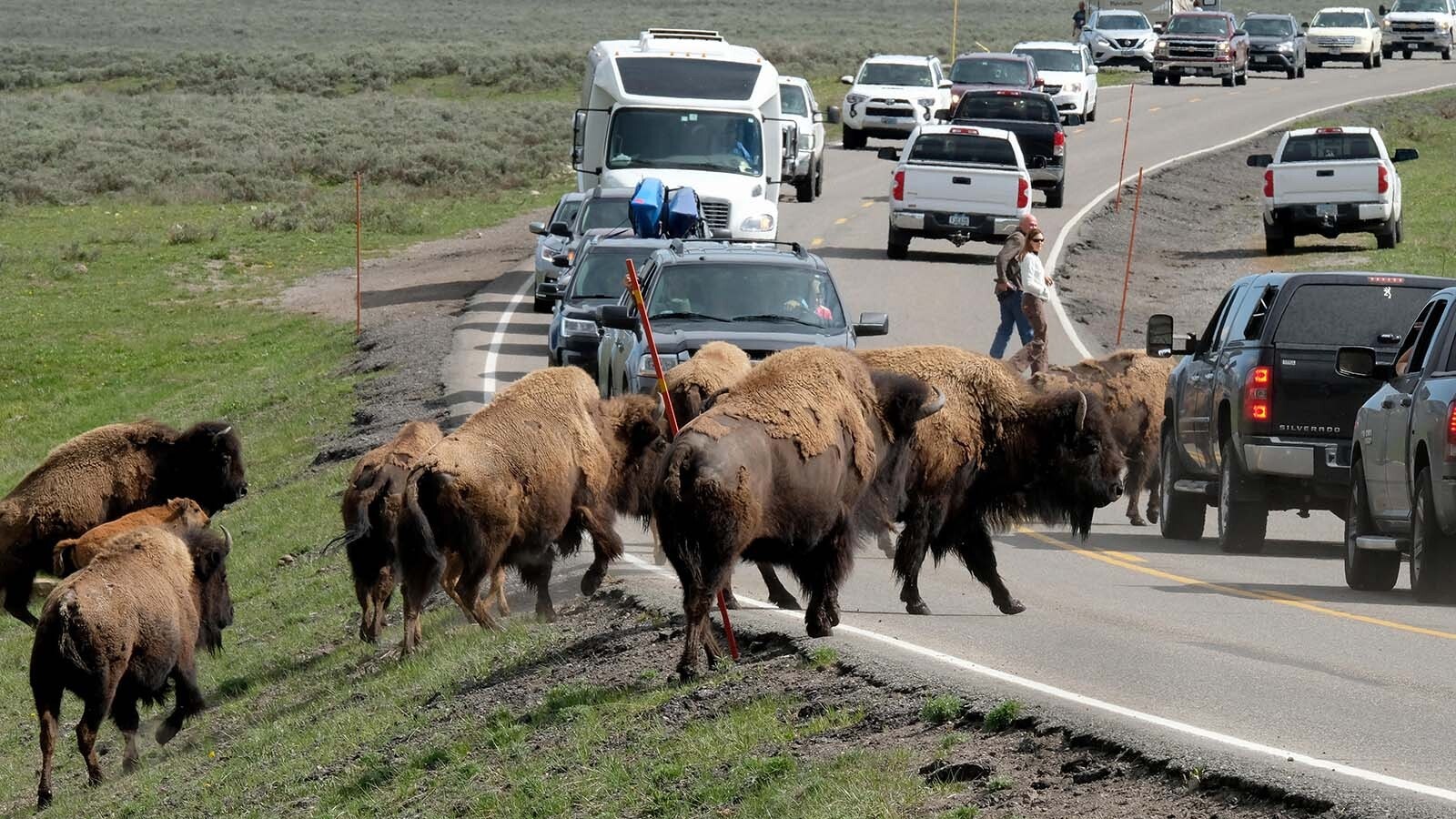
Yellowstone isn’t a controlled wildlife environment. Wild animals move through roadsides, campgrounds, parking areas, and other developed portions of the park.
NPS specifically cites predators such as bears and coyotes as one reason for Yellowstone’s pet restrictions. Even when your dog is leashed, wildlife encounters can create situations you wouldn’t experience at a typical campground or roadside stop.
Never allow your dog to approach, chase, bark at, or interact with wildlife.
A dog-friendly Yellowstone trip still requires you to treat wildlife areas as wildlife habitat—not as places for your dog to explore.
4. Dogs Must Be Physically Controlled at All Times
Yellowstone requires pets to be physically controlled at all times.
Your dog must be:
- inside your vehicle,
- in a crate, or
- on a leash no longer than six feet.
Pets cannot be left unattended or tied to objects, and owners must bag and properly dispose of pet waste.
NPS also warns against leaving pets in situations without adequate food, water, shade, ventilation, or other basic needs. Pets may remain in vehicles for short periods, but NPS recommends having someone stay behind to monitor them.
That last rule matters enormously when planning Yellowstone sightseeing. Leaving your dog in the car all day while you explore isn’t a workable solution.
5. Bringing a Dog Changes Your Yellowstone Itinerary

A Yellowstone trip with a dog tends to become more focused on scenic driving, campgrounds, roadside areas, and places where your pet can legally remain with you.
That’s not necessarily a bad trip—but it’s different from the experience most first-time Yellowstone visitors are planning.
If your itinerary includes hiking, Old Faithful, Grand Prismatic Spring, geyser basins, and long periods away from your vehicle, you’ll need to arrange care for your dog or have someone in your group stay behind.
If you’re primarily road-tripping, camping, and enjoying Yellowstone’s scenery from developed areas, bringing your dog may be much easier to manage.
Where Can Dogs Go in Yellowstone?
Dogs can accompany you in certain developed areas as long as you follow Yellowstone’s pet regulations.
Generally, that means staying within 100 feet of roads, parking areas, and campgrounds while keeping your dog physically controlled.
This makes campgrounds and some roadside stops much easier to manage than trails or geothermal attractions.
Always pay attention to signs and current park regulations rather than assuming a paved or developed-looking area automatically allows pets.
What a Dog-Friendly Yellowstone Day Might Look Like
This style works considerably better for a slower road trip than an itinerary built around hiking and geothermal boardwalks.
A realistic Yellowstone day with your dog may include scenic driving, time at your campground, short stops in permitted developed areas, and sightseeing that doesn’t require leaving your pet unattended.
If one person is willing to remain with the dog, other members of your group can alternate visiting attractions where pets aren’t permitted.
Does an RV Make Yellowstone Easier With a Dog?
An RV can make some parts of traveling with a dog more convenient because your campground becomes a more functional home base.
But an RV doesn’t change Yellowstone’s pet restrictions. Your dog still can’t join you on hiking trails, thermal boardwalks, or in the backcountry.
If you’re planning an RV trip, think of the campground as your base rather than assuming the RV gives your dog greater access inside the park.
If you’re planning an RV trip, my RV Campground Reservations Guide can help you plan your campground strategy before you arrive. Think of the campground as your base rather than assuming the RV gives your dog greater access inside the park.
Should You Bring Your Dog to Yellowstone?
Bringing your dog can work if your trip is primarily focused on scenic driving, camping, relaxed sightseeing, and spending limited time away from developed areas.
It becomes much harder if this is your first Yellowstone trip and you want to hike, explore geyser basins, walk thermal boardwalks, or spend full days moving between major attractions.
For many travelers, the deciding question is simple:
How many of the things you most want to do in Yellowstone allow your dog to come with you?
If the answer is very few, arranging pet care may give both you and your dog a better trip.
Consider Splitting Your Trip
One practical option is to combine Yellowstone with time in a more dog-friendly destination outside the park.
You can arrange boarding or pet care for the days you want to explore Yellowstone’s trails and geothermal attractions, then spend another portion of the trip somewhere that gives your dog more opportunities to walk and explore.
Yellowstone itself does not have kennels, so investigate options in surrounding communities before you arrive, particularly during the busy summer season.
Finding Dog-Friendly Activities Outside Yellowstone

If traveling with your dog is an important part of your vacation, look beyond the national park boundaries when building your itinerary.
Surrounding gateway communities and public lands may offer more pet-friendly lodging, walking areas, and outdoor recreation than Yellowstone itself.
Rules vary considerably by land manager and location, so verify leash requirements and trail restrictions for each place before going.
Frequently Asked Questions
Can dogs go on trails in Yellowstone?
No. Pets are not allowed on Yellowstone hiking trails or in the backcountry.
Are dogs allowed at Old Faithful?
Dogs are not allowed on Yellowstone’s thermal-area boardwalks or trails, including the boardwalk areas used to explore geothermal attractions. Pets cannot bypass this rule by being carried or placed in a stroller, backpack, or carrier.
Can dogs go to Grand Prismatic Spring?
Dogs are not permitted on thermal-area boardwalks or trails, so you cannot take your dog onto the walking areas used to visit Grand Prismatic Spring.
Can I leave my dog in the car while visiting Yellowstone?
Pets may remain in vehicles for short periods, but NPS says they cannot be left where food, water, shade, ventilation, or other basic needs are inadequate and recommends that someone remain behind to monitor them.
Is Yellowstone worth visiting with a dog?
It can be if your trip focuses on scenic driving, camping, and developed areas. If your priorities include hiking and geothermal boardwalks, bringing a dog will significantly limit what you can do.
Bottom Line
Yes, you can bring your dog to Yellowstone—but you can’t experience Yellowstone with a dog the same way you can experience many other outdoor destinations.
Pets must remain in limited developed areas near roads, parking areas, and campgrounds. They aren’t allowed on hiking trails, thermal boardwalks, in thermal areas, or in the backcountry.
If you’re planning a scenic, camping-focused trip and understand those limitations, bringing your dog can work.
If this is your first Yellowstone visit and your priorities are geysers, boardwalks, and hiking, arranging pet care will give you considerably more freedom to experience the park.
Decide what you want to do in Yellowstone first. Then decide whether bringing your dog fits that trip.