15 Best Stops on the Oregon Coast: Must-See Places Worth Your Time

This post may contain affiliate links. If you book through them or make a purchase through links in this article, I may earn a small commission at no extra cost to you. I only recommend options that simplify planning and improve your trip experience.
Table of Contents
One of the hardest parts of planning an Oregon Coast road trip isn’t finding places to stop. It’s deciding which ones are actually worth your limited time.
Highway 101 passes beaches, sea stacks, lighthouses, coastal towns, state parks, viewpoints, and trailheads for more than 300 miles. If you try to stop every time something looks interesting, a simple driving day can quickly turn into an exhausting itinerary.
The better approach is to choose a few high-payoff stops and leave enough time to actually experience them.
This guide narrows the coast down to 15 stops that are especially worthwhile for a first Oregon Coast road trip, from Cannon Beach in the north to the Samuel H. Boardman Scenic Corridor in the south. Some are quick viewpoints, while others deserve several hours.
You don’t need to visit all 15 on one trip. Use the list to decide which places match your route, interests, and available time.
If you’re still deciding how to divide your days along the coast, start with my Oregon Coast Itinerary after you’ve chosen your priority stops.
Quick Answer
If this is your first Oregon Coast road trip and you can’t stop everywhere, prioritize Cannon Beach, Cape Kiwanda, Cape Perpetua, Heceta Head Lighthouse, Bandon Beach, and the Samuel H. Boardman Scenic Corridor.
Together, those stops give you a strong mix of what makes the Oregon Coast special: wide beaches, sea stacks, dramatic headlands, lighthouses, forested coastline, and rugged southern scenery.
You don’t need to visit all six if they don’t fit naturally into your route. A traveler spending three days on the North and Central Coast should not rush hundreds of miles south just to check Samuel H. Boardman off the list.
WTT Tip: Choose your must-see stops based on the section of coast you’re actually traveling. Three or four well-planned stops that fit your route will usually make a better trip than racing between places simply because they’re on a “best of” list.
How to Use This Oregon Coast Stops Guide
The Oregon Coast is easiest to plan when you think of it as three broad regions: North Coast, Central Coast, and South Coast.
Rather than choosing a long list of attractions first and then trying to fit them into your trip, start with the section of coast you’ll actually be traveling. From there, choose a few priority stops that fit naturally along your route.
For most sightseeing days, two to four major stops is plenty. A lighthouse where you want to walk a trail may take several hours, while a roadside viewpoint might take 20 minutes. Beaches almost always take longer than expected once you start walking, exploring tide pools, or simply decide you aren’t ready to leave.
Leave some open time too. One of the best parts of driving Highway 101 is discovering an overlook, beach, or small town you hadn’t planned to visit.
The 15 stops below are arranged north to south, making it easier to see which ones fit together geographically. If you need help turning them into actual driving days, use my Oregon Coast Itinerary.
WTT Tip: Don’t judge an Oregon Coast driving day by mileage alone. A relatively short stretch of Highway 101 can easily fill an entire day once you add viewpoints, beach walks, meals, parking, and spontaneous stops.
Make the Drive Between Stops Part of the Trip
The Oregon Coast isn’t just about the places where you get out of the car. Highway 101 is part of the experience, too.
If you’d like more context about what you’re seeing as you travel between stops, GuideAlong offers a self-guided Oregon Coast audio tour that uses your phone’s GPS to automatically play stories, local information, and tips as you drive.
The tour covers the coast from Astoria to Florence, which lines up especially well with the North and Central Coast stops in this guide. You can use this list to decide where you want to get out and explore, while GuideAlong adds commentary during the drive between them.
You still control the trip. Stop at an unexpected viewpoint, spend longer in a coastal town, or skip something that doesn’t interest you without having to follow a scheduled tour.
Once you’ve downloaded the tour, it works without a data connection.
WTT Tip: Download the GuideAlong Oregon Coast tour before starting your road trip while you have reliable Wi-Fi. Keep in mind that the current tour ends around Florence, while several stops in this guide continue farther south to Bandon and the Samuel H. Boardman Scenic Corridor.
Best Stops on the North Oregon Coast
1. Cannon Beach (Haystack Rock)
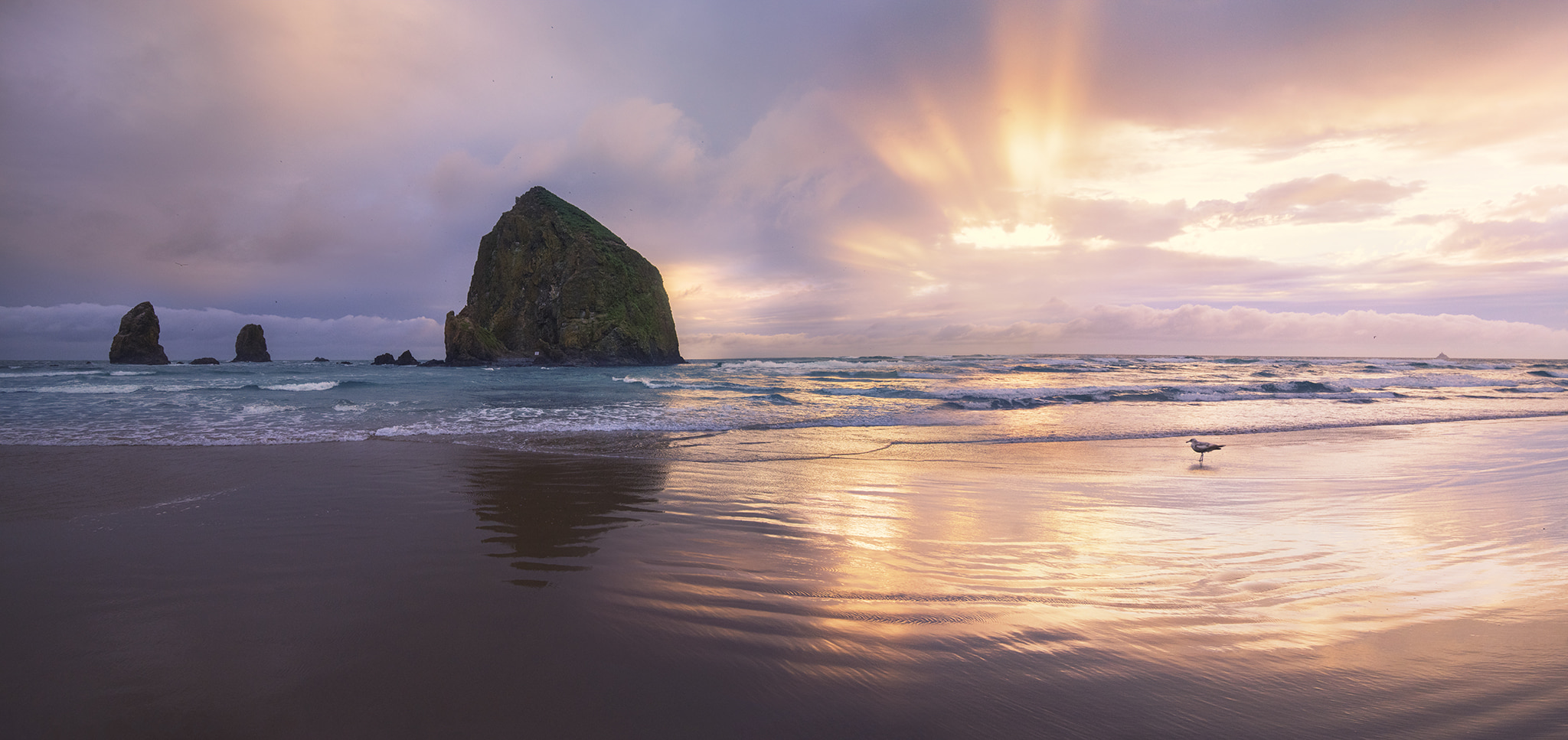
Best for: First-time visitors, beach walks, and iconic Oregon Coast scenery
Cannon Beach earns its place on a first Oregon Coast trip because it combines one of the coast’s most recognizable landmarks with a beach that’s easy to spend time exploring.
Haystack Rock dominates the shoreline, but don’t treat this as a quick photo stop. Walk the beach, explore the tide pools when conditions allow, and give yourself time to enjoy the coastline rather than immediately getting back in the car.
Cannon Beach is also a good place to build in a meal or overnight stay, which makes it more useful to a road-trip itinerary than a viewpoint where you simply stop for 15 minutes.
Parking and the beach can become busy, particularly during popular summer weekends and holidays, so allow more time than you think you’ll need.
If Cannon Beach is one of your main destinations rather than just a road-trip stop, see my Cannon Beach Travel Guide and Cannon Beach Itinerary.
How long to allow: At least 1–2 hours for the beach; longer if you’re eating, shopping, or exploring town.
WTT Tip: Check the tide schedule if seeing the tide pools around Haystack Rock is important to you. Don’t plan tide-pool exploring around a fixed clock time—the useful window changes with the tides.
2. Ecola State Park

Best for: Elevated coastal views, forest scenery, and short hikes
Just north of Cannon Beach, Ecola State Park gives you a completely different perspective of the coastline. Instead of standing at beach level, you’re looking across forested headlands, offshore sea stacks, and long stretches of the Pacific.
That contrast is what makes Ecola worth adding even if you’re already visiting Cannon Beach.
You can make this a relatively quick scenic stop or spend considerably longer exploring the park’s trails and viewpoints. Because Ecola and Indian Beach are part of the same state park, it also makes sense to consider them together rather than treating them as completely separate destinations on your driving day.
Weather can change the experience dramatically. Fog and low clouds sometimes obscure the long-distance views, while clear conditions can produce some of the most expansive coastal scenery on the North Coast.
Road, trail, and viewpoint access can occasionally be affected by storms, landslides, or maintenance, so check current Oregon State Parks conditions before making Ecola a must-do part of your itinerary.
How long to allow: About 1–2 hours for viewpoints and a short walk; longer if you’re hiking or continuing to Indian Beach.
WTT Tip: If you’re short on time, prioritize the main coastal viewpoints rather than trying to fit a longer hike into the same day as Cannon Beach and several other North Coast stops.
As of September 2026, the west section of the Clatsop Loop Trail is closed due to an active landslide. Check current Oregon State Parks conditions before your visit, since trail and road access at Ecola can change.
3. Indian Beach

Best for: Rugged shoreline, beach walks, and a quieter-feeling alternative to downtown Cannon Beach
Indian Beach sits within Ecola State Park but feels very different from the broad sandy shoreline at Cannon Beach. Forested headlands frame a smaller, more rugged beach with offshore rocks and a distinctly wilder feel.
It’s especially worth adding if you’re already visiting Ecola State Park and have enough time to explore beyond the main viewpoints. Walk the beach, watch the surfers, or use it as the starting point for one of the surrounding trails.
Don’t count on Indian Beach being uncrowded. Parking is limited, and the area can be popular on summer weekends and good-weather days. If the parking area is full, don’t let this one stop derail the rest of your North Coast itinerary.
Because Indian Beach and Ecola’s viewpoints are part of the same park visit, I would generally plan them together rather than allocating two completely separate blocks of your road-trip day.
How long to allow: About 1 hour for the beach, or several hours if you’re adding a hike.
WTT Tip: If you’re already spending significant time at Cannon Beach and Ecola State Park, Indian Beach is optional. Add it because you want another beach or hike—not because you feel like you need to check off all three North Coast stops.
Best Stops on the Central Oregon Coast
4. Cape Kiwanda (Pacific City)

Best for: Sand dunes, dramatic headland scenery, and a beach stop with plenty of personality
Cape Kiwanda is one of the most distinctive stops on the Central Oregon Coast. Here, a broad sandy beach meets a sandstone headland, with Pacific City’s offshore sea stack rising beyond the shoreline.
This is a good stop when you want more than a quick viewpoint. You can walk the beach, watch surfers and dory boats, explore the permitted areas around the cape, or simply spend some time enjoying the view.
Cape Kiwanda’s sandstone cliffs are fragile and can be dangerous. Stay behind fences and warning signs, avoid closed areas, and don’t approach unstable cliff edges—even if you see other visitors doing it. Waves and changing tides also require caution along the shoreline.
Pacific City makes this an easy place to combine sightseeing with lunch, a longer beach break, or an overnight stay.
For more help planning time here, see my Pacific City Travel Guide.
How long to allow: About 1–2 hours for the beach and cape area; longer if you’re eating or spending additional time in Pacific City.
WTT Tip: Cape Kiwanda is worth slowing down for. If your itinerary already includes several quick viewpoints that day, use this as one of the places where you actually get out of the car and spend some time on the coast.
5. Depoe Bay

Best for: Whale watching, ocean viewpoints, and an easy break along Highway 101
Depoe Bay is one of the easiest places to add to a Central Oregon Coast road trip because Highway 101 runs directly through town. You don’t need to commit half a day to make the stop worthwhile.
The seawall provides expansive ocean views, and this stretch of coast is well known for whale watching. Gray whales may be seen from shore at certain times of year, while whale-watching cruises offer another option if seeing wildlife is a priority for your trip.
The small harbor is another reason to stop. Even if you aren’t taking a tour, Depoe Bay works well for stretching your legs, watching the water, browsing town, or taking a break between longer sightseeing stops.
Don’t plan your visit around a guaranteed whale sighting. Wildlife is unpredictable, and conditions vary by season, weather, and day.
For more ideas nearby, see my Things to Do in Depoe Bay.
How long to allow: About 30–60 minutes for a quick town and viewpoint stop; several hours if you’re taking a whale-watching tour.
WTT Tip: Depoe Bay is especially useful on a day already packed with beaches and viewpoints. It gives you a different kind of coastal stop without requiring a major detour from Highway 101.
6. Devil’s Punchbowl

Best for: Coastal geology and a quick scenic stop
Devil’s Punchbowl State Natural Area is an easy stop between Depoe Bay and Newport. The main attraction is a large rock formation created by the collapse of sea caves, which you can view from above near the parking area.
The experience changes with the ocean. Higher tides and rougher conditions can send waves swirling through the formation, while lower water may reveal more of its shape and geology.
That means there isn’t one perfect tide for every visitor. If you’re interested in dramatic wave action, check the tide and weather conditions before you arrive. If you’re more interested in seeing the formation itself, lower water can be worthwhile too.
The overlook makes this an easy stop even on a busy road-trip day, and the surrounding Otter Rock area gives you the option to stay longer if you want to explore.
Always keep a safe distance from exposed rocks and surf. Sneaker waves and changing ocean conditions are a serious concern along the Oregon Coast.
A day-use parking permit is now required at Devil’s Punchbowl, so factor that into a quick stop.
How long to allow: About 20–45 minutes for the overlook; longer if you’re exploring the surrounding area.
WTT Tip: Don’t rearrange an entire Oregon Coast driving day just to reach Devil’s Punchbowl at a particular tide. Treat changing ocean conditions as part of the experience rather than something you need to perfectly time.
7. Yaquina Head Lighthouse

Best for: Lighthouse views, tide pools, wildlife, and a longer coastal stop
Yaquina Head Outstanding Natural Area is worth more time than a quick lighthouse photo. The headland extends into the Pacific just north of Newport, giving you expansive ocean views along with access to the historic Yaquina Head Lighthouse.
Cobble Beach below the lighthouse adds another reason to stop. At appropriate tides, the rocky shoreline and tide pools can reveal anemones, mussels, sea stars, and other marine life. Offshore rocks also provide habitat for seabirds, and you may spot seals or whales from the headland.
If lighthouse tours are important to you, check current availability before your visit rather than assuming you’ll be able to go inside. Tour schedules and access can vary.
The exposed headland can also be windy and much cooler than Newport, so keep a jacket handy even when the weather seems mild elsewhere along the coast.
How long to allow: About 1–2 hours for the lighthouse, viewpoints, and Cobble Beach; longer if you’re exploring tide pools or joining a tour.
WTT Tip: If tide pooling is a priority, check the tide table before choosing when to visit Yaquina Head. Otherwise, let this stop fit naturally into your Newport-area route rather than building the entire day around it.
8. Newport Bayfront

Best for: Working waterfront atmosphere, sea lions, food, and a break from scenic viewpoints
Newport’s Historic Bayfront is a good change of pace in the middle of an Oregon Coast road trip. Instead of another beach or overlook, you’ll find fishing boats, seafood restaurants, shops, docks, and the activity of a working waterfront.
One of the Bayfront’s most popular attractions is the colony of California sea lions that frequently gathers near the docks. They’re entertaining to watch, but they’re wild animals—enjoy them from the designated viewing areas rather than trying to get closer.
This is also a practical place to stop for lunch or dinner, which makes it easy to work into a sightseeing day without adding another completely separate activity.
You don’t need hours here unless you want to shop, eat, or explore more of Newport. If your trip is heavily focused on natural scenery, use the Bayfront as a shorter break before continuing south.
For more things to do in the area, see my Newport Oregon Travel Guide.
How long to allow: About 45–90 minutes for a walk and sea lions; longer if you’re eating or exploring Newport.
WTT Tip: Pair the Bayfront with Yaquina Head rather than treating Newport as a single stop. Together they give you both the natural coastline and the working coastal-town side of Oregon.
9. Cape Perpetua

Best for: Elevated ocean views, forest trails, and one of the strongest all-around stops on the Central Coast
Cape Perpetua is one of the places I would prioritize if you have limited time on the Central Oregon Coast because it gives you several different coastal experiences in one area.
From the higher viewpoints, you can look across miles of coastline. Closer to the water, trails lead through coastal forest and toward rocky shoreline features. You can make Cape Perpetua a scenic driving stop or spend several hours hiking and exploring.
This is also where planning gets a little confusing because Thor’s Well and Spouting Horn are nearby. Rather than treating Cape Perpetua and every surrounding feature as completely separate stops on your itinerary, think of this as one larger sightseeing area and decide how much of it you actually want to explore.
Weather matters here. Fog or low clouds can obscure the elevated views, while wind and wet conditions can change which trails or shoreline areas you feel comfortable exploring.
How long to allow: About 1–2 hours for viewpoints and a short walk; 3 hours or more if you’re hiking and exploring the surrounding coastal features.
WTT Tip: If you’re short on time, make Cape Perpetua one of your major Central Coast stops and choose a few experiences within the area rather than trying to see every viewpoint and trail.
10. Thor’s Well & Spouting Horn

Best for: Dramatic wave action and unusual coastal geology
Thor’s Well and Spouting Horn are part of the Cape Perpetua Scenic Area and are easy to combine with the rest of your Cape Perpetua visit.
Thor’s Well is a bowl-shaped opening in the rocky shoreline where ocean water surges in and appears to drain back into the sea. Nearby, Spouting Horn can send ocean spray into the air when waves and tides create the right conditions.
The experience varies considerably with the ocean. More active conditions can create dramatic wave action, but they also increase the danger along the exposed shoreline. You do not need to stand close to Thor’s Well to make this stop worthwhile.
Stay on designated routes and viewing areas, pay attention to posted warnings, and never turn your back on the ocean. Wet rocks, sneaker waves, and unexpectedly powerful surf are much more important considerations than getting the perfect photograph.
Because these features are so close to Cape Perpetua, I would treat them as part of the same sightseeing area rather than planning a separate major stop.
How long to allow: About 30–60 minutes, or include it within a longer Cape Perpetua visit.
WTT Tip: Don’t plan this stop around the idea that “high tide is best.” Check tide, weather, and ocean conditions, then enjoy the features from a safe location. No photograph is worth getting closer to dangerous surf.
11. Heceta Head Lighthouse

Best for: Classic Oregon Coast lighthouse scenery, coastal views, and a short walk
Heceta Head Lighthouse is one of the Oregon Coast’s most recognizable landmarks and an easy stop to combine with a Highway 101 road trip.
The lighthouse sits above the ocean on Heceta Head, but part of the experience is the walk to reach it. From the parking area near Cape Creek, a short uphill trail leads toward the lighthouse and opens to beautiful views of the surrounding coastline.
You can also see Heceta Head from viewpoints along Highway 101, so this stop works even if you don’t have time for a longer visit. If you do walk up to the lighthouse, allow enough time to enjoy the headland rather than treating it as another quick photograph.
Lighthouse access and tours can vary, so check current information before your trip if going inside is important to you.
How long to allow: About 45–90 minutes for the walk and lighthouse area; less if you’re only stopping at a highway viewpoint.
WTT Tip: If your schedule is tight, don’t skip Heceta Head completely. A roadside viewpoint can give you the classic lighthouse-and-coastline view without turning it into a long stop.
Best Stops on the South Oregon Coast
12. Oregon Dunes National Recreation Area

Best for: Classic Oregon Coast lighthouse scenery, coastal views, and a short walk
Heceta Head Lighthouse is one of the Oregon Coast’s most recognizable landmarks and an easy stop to combine with a Highway 101 road trip.
The lighthouse sits above the ocean on Heceta Head, but part of the experience is the walk to reach it. From the parking area near Cape Creek, a short uphill trail leads toward the lighthouse and opens to beautiful views of the surrounding coastline.
You can also see Heceta Head from viewpoints along Highway 101, so this stop works even if you don’t have time for a longer visit. If you do walk up to the lighthouse, allow enough time to enjoy the headland rather than treating it as another quick photograph.
Lighthouse access and tours can vary, so check current information before your trip if going inside is important to you.
How long to allow: About 45–90 minutes for the walk and lighthouse area; less if you’re only stopping at a highway viewpoint.
WTT Tip: If your schedule is tight, don’t skip Heceta Head completely. A roadside viewpoint can give you the classic lighthouse-and-coastline view without turning it into a long stop.
13. Bandon Beach (Face Rock)

Best for: Sea stacks, long beach walks, and sunset
Bandon Beach stands out even on a coastline filled with dramatic beaches. Instead of one dominant offshore rock, this stretch of shoreline is scattered with sea stacks and rock formations, including the distinctive Face Rock.
Face Rock State Scenic Viewpoint gives you an easy look at the coastline from above, but the beach itself is what makes this stop worth more than a few minutes. If conditions allow, walk along the sand and explore different views of the formations rather than seeing them only from the overlook.
Bandon is particularly beautiful near sunset, when the sea stacks create dramatic silhouettes across the water. But you don’t need perfect evening light to make the stop worthwhile—the coastline is impressive throughout the day.
If you’re spending the night in Bandon, this is an easy place to revisit when the weather or light changes.
For more help planning your time here, see my Bandon Oregon Travel Guide.
How long to allow: About 1–2 hours for the viewpoint and beach; longer if you’re staying for sunset or exploring more of Bandon.
WTT Tip: If you’re continuing south toward Samuel H. Boardman, don’t rush through Bandon simply because more dramatic scenery is ahead. This is one of the South Coast stops that’s worth giving real beach time.
14. Samuel H. Boardman Scenic Corridor

14. Samuel H. Boardman Scenic Corridor
Best for: Rugged cliffs, forested coastline, hidden coves, and South Coast scenery
Samuel H. Boardman State Scenic Corridor stretches for roughly 12 miles along the Southern Oregon Coast between Brookings and Gold Beach. Rather than one attraction, it’s a collection of viewpoints, trailheads, coves, beaches, and dramatic stretches of coastline.
That’s important when planning your day. You could drive through and stop at a couple of overlooks, but you’ll get much more from the corridor if you choose a few places you genuinely want to explore and leave enough time to get out of the car.
Depending on your interests, you might prioritize an easy viewpoint, a beach, or one of the corridor’s hiking areas. You do not need to stop at every pullout or trailhead to experience Samuel H. Boardman.
Trails here can be steep, muddy, exposed, or affected by weather and erosion. Stay on maintained routes, respect closures and warning signs, and don’t follow unofficial social-media paths toward cliff edges just to recreate a photograph.
How long to allow: At least 2–3 hours for several stops; a half day if you want to hike and explore the corridor more thoroughly.
WTT Tip: Don’t save Samuel H. Boardman for the final hour of an already packed driving day. If the South Coast is part of your route, give this stretch enough time to be one of the day’s main experiences.
15. Natural Bridges

15. Natural Bridges
Best for: Dramatic coastal views and natural rock formations
Natural Bridges is one of the most recognizable viewpoints within the Samuel H. Boardman Scenic Corridor. From the designated viewing area, you can look across a rugged section of coastline where erosion has carved natural arches into the rock below.
This is best treated as a viewpoint stop, not as a place where you need to climb down toward the arches.
You may see photographs online taken from unofficial routes closer to the formations, but steep terrain, unstable ground, exposed cliffs, and serious fall hazards make leaving designated routes dangerous. Stay on maintained trails, obey closures and warning signs, and don’t attempt to recreate social-media photographs from exposed locations.
Because Natural Bridges is already within Samuel H. Boardman Scenic Corridor, don’t plan it as another major destination requiring hours. Include it as one of the viewpoints you choose while exploring the corridor.
How long to allow: About 20–30 minutes for the designated viewpoint, longer if you’re combining it with maintained trails nearby.
WTT Tip: The view is the experience here. You do not need to stand on, beneath, or beside the natural bridges to make this stop worthwhile.
How to Fit These Oregon Coast Stops Into Your Route
The 15 stops in this guide stretch across most of the Oregon Coast, so trying to visit all of them in a short trip defeats the purpose of narrowing the list down in the first place.
If you have 2–3 days, concentrate on one section of the coast. Cannon Beach, Ecola State Park, and Cape Kiwanda work naturally for a North Coast-focused trip, while Newport, Cape Perpetua, and Heceta Head give you a strong Central Coast experience.
With 4–5 days, you can comfortably connect more of the North and Central Coast or focus on the Central and South Coast without making every day a long driving day.
For a week-long road trip, you have enough time to travel much farther along Highway 101 and include highlights from all three regions. Even then, you don’t need to visit every stop on this list. Choose the places that matter most to you and leave room for beaches, meals, weather changes, and unexpected discoveries.
The South Coast deserves particular attention when planning. Bandon and Samuel H. Boardman are far enough south that they shouldn’t be treated as quick additions to a short Cannon Beach or Newport trip.
For a day-by-day route, use my Oregon Coast Itinerary.
WTT Tip: Decide how far down the coast you realistically want to travel before choosing your stops. Your route should determine your must-see list—not the other way around.
What Most People Get Wrong
The biggest Oregon Coast road-trip mistake is assuming that more stops automatically make a better trip.
Highway 101 is full of places that look close together on a map. It’s tempting to build a day with six beaches, three viewpoints, a lighthouse, and a coastal town because the driving distance doesn’t seem unreasonable.
What the map doesn’t show is how much time you’ll spend parking, walking to viewpoints, exploring beaches, waiting for meals, checking tide pools, or pulling over somewhere you hadn’t planned to stop.
The opposite mistake is rushing past the places that deserve more time. Cape Perpetua, Bandon Beach, Cannon Beach, and Samuel H. Boardman aren’t necessarily places you want to experience through a 15-minute parking-lot stop.
A better road trip mixes a few major experiences with smaller spontaneous stops. Choose the places you would genuinely be disappointed to miss, give those enough time, and let everything else remain optional.
Weather matters too. Fog may hide a viewpoint, rain may change your hiking plans, and a beautiful stretch of beach may convince you to stay longer than expected. Your itinerary should have enough breathing room to accommodate that.
WTT Tip: Before each driving day, identify your two or three non-negotiable stops. Everything else is a bonus. That simple rule makes it much easier to adjust when the coast inevitably changes your plans.
What to Bring on an Oregon Coast Road Trip
Even in summer, Oregon Coast weather can change quickly. A sunny morning can turn cool, windy, or wet once you reach an exposed headland or beach.
A lightweight rain jacket, comfortable walking shoes, and layers you can add or remove throughout the day will cover most sightseeing stops. I also like having a reusable water bottle and portable charger in the car, especially on longer driving days.
If you’re planning tide-pool stops or spending significant time on beaches, shoes with good traction are more useful than sandals alone. Keep an extra layer in the car too—places like Yaquina Head, Cape Perpetua, and exposed South Coast viewpoints can feel considerably colder and windier than nearby towns.
I’ve put the gear I recommend for this kind of trip in my Oregon Coast Packing List, including layers, rain gear, and practical road-trip essentials.
For a more complete packing breakdown, see my Oregon Coast Packing List guide.
WTT Tip: Keep your rain jacket and an extra layer somewhere you can reach without unpacking the car. Oregon Coast weather changes too often to bury them at the bottom of your luggage.
Frequently Asked Questions
What are the best stops on the Oregon Coast?
For a first Oregon Coast road trip, some of the strongest stops are Cannon Beach, Cape Kiwanda, Cape Perpetua, Heceta Head Lighthouse, Bandon Beach, and Samuel H. Boardman Scenic Corridor.
The best choices for your trip depend on which section of the coast you’re traveling. Don’t drive hundreds of extra miles simply to reach a stop on a “must-see” list.
How many stops should I make per day on the Oregon Coast?
For most travelers, two to four major stops per day is realistic.
A viewpoint might take only 20 minutes, while a beach, lighthouse, hike, or coastal town can easily take several hours. Leave room for meals, parking, weather, and unplanned stops along Highway 101.
What is the most scenic part of the Oregon Coast?
There isn’t one section that’s objectively the most scenic. The North Coast is known for places like Cannon Beach and its dramatic headlands, the Central Coast combines lighthouses and elevated viewpoints, and the South Coast becomes especially rugged around Bandon and Samuel H. Boardman Scenic Corridor.
If dramatic cliffs, coves, and rugged coastline are your priority, the South Coast is particularly worth considering.
Is 3 days enough for the Oregon Coast?
Three days is enough for a good Oregon Coast trip if you concentrate on one or two regions rather than trying to cover the entire coastline.
For a first trip, the North and Central Coast fit more comfortably into three days. If you want to travel from the North Coast all the way through Samuel H. Boardman, give yourself more time.
How many days do you need to drive the Oregon Coast?
Five to seven days gives you a much more comfortable road trip if you want to explore a large portion of the coast.
You can physically drive Highway 101 much faster, but that misses the point. Beaches, viewpoints, hikes, lighthouses, and coastal towns are what make the route worthwhile.
Should I drive the entire Oregon Coast on my first trip?
Only if you have enough time to enjoy it. The coast stretches for hundreds of miles, and trying to cover the entire route in a few days usually means spending too much of the trip in the car.
A shorter route with more time at beaches, viewpoints, and towns is often a better first experience than driving the entire coastline simply to say you completed it.
What Oregon Coast stops should I skip if I’m short on time?
Skip stops that duplicate experiences you’ve already had or require significant backtracking.
For example, you don’t necessarily need Cannon Beach, Ecola State Park, and Indian Beach if you only have a few hours on the North Coast. Likewise, Cape Perpetua and Thor’s Well can be treated as one larger sightseeing area.
Prioritize variety and location rather than trying to complete all 15 stops.
Bottom Line
The best Oregon Coast road trip isn’t the one where you check off the most stops. It’s the one where you choose the places that fit your route and have enough time to actually enjoy them.
Use these 15 stops as a starting point, then narrow the list based on how many days you have and which parts of the coast you’re visiting. A few well-chosen beaches, viewpoints, lighthouses, and coastal towns will give you a much better trip than trying to stop everywhere between Cannon Beach and the California border.
Plan Your Oregon Coast Trip
If you’re ready to turn these stops into an actual trip, the Oregon Coast Travel Planning System helps you organize your route, stops, lodging, and daily plans without piecing everything together from scratch.
You may also want:
- Oregon Coast Travel Guide — for the bigger picture before you finalize your trip
- Oregon Coast Itinerary — for building your day-by-day route
- Where to Stay on the Oregon Coast — for choosing the best overnight bases
Once you know which part of the coast you’ll be exploring, you can also compare Oregon Coast hotels on Booking.com. Staying near your priority stops can save a surprising amount of backtracking on Highway 101.